About this ebook
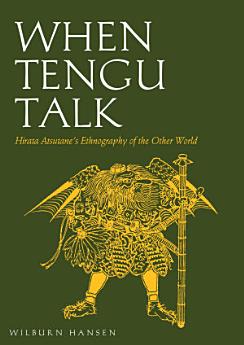
Hirata Atsutane (1776–1843) has been the subject of numerous studies that focus on his importance to nationalist politics and Japanese intellectual and social history. Although well known as an ideologue of Japanese National Learning (Kokugaku), Atsutane’s significance as a religious thinker has been largely overlooked. His prolific writings on supernatural subjects have never been thoroughly analyzed in English until now. In When Tengu Talk, Wilburn Hansen focuses on Senkyo ibun (1822), a voluminous work centering on Atsutane’s interviews with a fourteen-year-old Edo street urchin named Kozo Torakichi who claimed to be an apprentice tengu, a supernatural creature of Japanese folklore. Hansen uncovers in detail how Atsutane employed a deliberate method of ethnographic inquiry that worked to manipulate and stimulate Torakichi’s surreal descriptions of everyday existence in a supernatural realm, what Atsutane termed the Other World. Hansen’s investigation and analysis of the process begins with the hypothesis that Atsutane’s project was an early attempt at ethnographic research, a new methodological approach in nineteenth-century Japan. Hansen posits that this "scientific" analysis was tainted by Atsutane’s desire to establish a discourse on Japan not limited by what he considered to be the unsatisfactory results of established Japanese philological methods.
A rough sketch of the milieu of 1820s Edo Japan and Atsutane’s position within it provides the backdrop against which the drama of Senkyo ibun unfolds. There follow chapters explaining the relationship between the implied author and the outside narrator, the Other World that Atsutane helped Torakichi describe, and Atsutane’s nativist discourse concerning Torakichi’s fantastic claims of a newly discovered Shinto holy man called the sanjin. Sanjin were partly defined by supernatural abilities similar (but ultimately more effective and thus superior) to those of the Buddhist bodhisattva and the Daoist immortal. They were seen as holders of secret and powerful technologies previously thought to have come from or been perfected in the West, such as geography, astronomy, and military technology. Atsutane sought to deemphasize the impact of Western technology by claiming these powers had come from Japan’s Other World. In doing so, he creates a new Shinto hero and, by association, asserts the superiority of native Japanese tradition. In the final portion of his book, Hansen addresses Atsutane’s contribution to the construction of modern Japanese identity. By the late Tokugawa, many intellectuals had grown uncomfortable with continued cultural dependence on Neo-Confucianism, and the Buddhist establishment was under fire from positivist historiographers who had begun to question the many contradictions found in Buddhist texts. With these traditional discourses in disarray and Western rationalism and materialism gaining public acceptance, Hansen depicts Atsutane’s creation of a new spiritual identity for the Japanese people as one creative response to the pressures of modernity.
When Tengu Talk adds to the small body of work in English on National Learning. It moreover fills a void in the area of historical religious studies, which is dominated by studies of Buddhist monks and priests, by offering a glimpse of a Shinto religious figure. Finally, it counters the image of Atsutane as a forerunner of the ultra-nationalism that ultimately was deployed in the service of empire. Lucid and accessible, it will find an appreciative audience among scholars of Shinto and Japanese and world religion. In addition to religion specialists, it will be of considerable interest to anthropologists and historians of Japan.
A rough sketch of the milieu of 1820s Edo Japan and Atsutane’s position within it provides the backdrop against which the drama of Senkyo ibun unfolds. There follow chapters explaining the relationship between the implied author and the outside narrator, the Other World that Atsutane helped Torakichi describe, and Atsutane’s nativist discourse concerning Torakichi’s fantastic claims of a newly discovered Shinto holy man called the sanjin. Sanjin were partly defined by supernatural abilities similar (but ultimately more effective and thus superior) to those of the Buddhist bodhisattva and the Daoist immortal. They were seen as holders of secret and powerful technologies previously thought to have come from or been perfected in the West, such as geography, astronomy, and military technology. Atsutane sought to deemphasize the impact of Western technology by claiming these powers had come from Japan’s Other World. In doing so, he creates a new Shinto hero and, by association, asserts the superiority of native Japanese tradition. In the final portion of his book, Hansen addresses Atsutane’s contribution to the construction of modern Japanese identity. By the late Tokugawa, many intellectuals had grown uncomfortable with continued cultural dependence on Neo-Confucianism, and the Buddhist establishment was under fire from positivist historiographers who had begun to question the many contradictions found in Buddhist texts. With these traditional discourses in disarray and Western rationalism and materialism gaining public acceptance, Hansen depicts Atsutane’s creation of a new spiritual identity for the Japanese people as one creative response to the pressures of modernity.
When Tengu Talk adds to the small body of work in English on National Learning. It moreover fills a void in the area of historical religious studies, which is dominated by studies of Buddhist monks and priests, by offering a glimpse of a Shinto religious figure. Finally, it counters the image of Atsutane as a forerunner of the ultra-nationalism that ultimately was deployed in the service of empire. Lucid and accessible, it will find an appreciative audience among scholars of Shinto and Japanese and world religion. In addition to religion specialists, it will be of considerable interest to anthropologists and historians of Japan.
Hirata Atsutane (1776–1843) has been the subject of numerous studies that focus on his importance to nationalist politics and Japanese intellectual and social history. Although well known as an ideologue of Japanese National Learning (Kokugaku), Atsutane’s significance as a religious thinker has ...
Discover more
Rate this ebook
Tell us what you think.
Reading information
Smartphones and tablets
Install the Google Play Books app for Android and iPad/iPhone. It syncs automatically with your account and allows you to read online or offline wherever you are.
Laptops and computers
You can listen to audiobooks purchased on Google Play using your computer's web browser.
eReaders and other devices
To read on e-ink devices like Kobo eReaders, you'll need to download a file and transfer it to your device. Follow the detailed Help Center instructions to transfer the files to supported eReaders.