Liburu elektroniko honi buruz
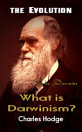
In "What is Darwinism?" Charles Hodge embarks on a critical examination of the theories posited by Charles Darwin, delving into the implications of natural selection on the fabric of faith and scientific understanding. Hodge's prose reflects the intellectual fervor of the late 19th century, intertwining clear, accessible language with rigorous philosophical inquiry. He situates Darwinism within the broader context of natural theology, addressing its intersection with issues of religious belief and moral philosophy, and poses essential questions about the nature of existence and divinity amidst the scientific paradigm shift of his time. Charles Hodge, a prominent theologian and a key figure in Princeton's theological seminary, was acutely aware of the rift growing between science and religion during the Victorian era. His commitment to Reformed theology and his scholarly background in both ancient texts and contemporary science informed his critiques against Darwinian principles. Hodge's aim was not merely to refute Darwinism but to provide a framework for understanding the relationship between faith and scientific discovery. This book is highly recommended for readers interested in the historical tension between theology and evolutionary biology, as well as for those who seek to contemplate the foundational questions of existence and God's role in creation. Hodge's thoughtful analysis offers timeless insights into the ongoing dialogue between science and religion. In this enriched edition, we have carefully created added value for your reading experience: - A succinct Introduction situates the work's timeless appeal and themes. - The Synopsis outlines the central plot, highlighting key developments without spoiling critical twists. - A detailed Historical Context immerses you in the era's events and influences that shaped the writing. - A thorough Analysis dissects symbols, motifs, and character arcs to unearth underlying meanings. - Reflection questions prompt you to engage personally with the work's messages, connecting them to modern life. - Hand‐picked Memorable Quotes shine a spotlight on moments of literary brilliance. - Interactive footnotes clarify unusual references, historical allusions, and archaic phrases for an effortless, more informed read.
In "What is Darwinism?" Charles Hodge embarks on a critical examination of the theories posited by Charles Darwin, delving into the implications of natural selection on the fabric of faith and scientific understanding. Hodge's prose reflects the intellectual fervor of the late 19th century, inter...
Ezagutu gehiago
Egileari buruz
Charles Hodge (1797–1878) was a preeminent American Presbyterian theologian and principal of Princeton Theological Seminary between 1851 and 1878. He was a leading figure in the Reformed tradition and is best known for his strong defense of Calvinist theology and conservative religious beliefs during the 19th century. Hodge's scholarly work constitutes a significant contribution to Christian theology, particularly in the realm of systematic theology. His three-volume 'Systematic Theology' is widely regarded as one of the most important theological texts in the American Reformed tradition, and it remains a foundational work for students of theology. In the context of the growing influence of Charles Darwin's evolutionary theory, Hodge's book 'What is Darwinism?' interrogates the compatibility of Darwinism with theistic belief, illustrating Hodge's engagement with contemporary scientific discourse. He rigorously examines the philosophical and theological implications of Darwinian theory, making a distinction between Darwinism as a scientific theory and as a worldview. Known for his erudite prose and logical reasoning, Hodge's writings continue to be referenced for their insightful analysis and intellectual rigor in the fields of theology and religious studies.
Charles Hodge (1797–1878) was a preeminent American Presbyterian theologian and principal of Princeton Theological Seminary between 1851 and 1878. He was a leading figure in the Reformed tradition and is best known for his strong defense of Calvinist theology and conservative religious beliefs du...
Baloratu liburu elektroniko hau
Eman iezaguzu iritzia.
Irakurtzeko informazioa
Telefono adimendunak eta tabletak
Instalatu Android eta iPad/iPhone gailuetarako Google Play Liburuak aplikazioa. Zure kontuarekin automatikoki sinkronizatzen da, eta konexioarekin nahiz gabe irakurri ahal izango dituzu liburuak, edonon zaudela ere.
Ordenagailu eramangarriak eta mahaigainekoak
Google Play-n erositako audio-liburuak entzuteko aukera ematen du ordenagailuko web-arakatzailearen bidez.
Irakurgailu elektronikoak eta bestelako gailuak
Tinta elektronikoa duten gailuetan (adibidez, Kobo-ko irakurgailu elektronikoak) liburuak irakurtzeko, fitxategi bat deskargatu beharko duzu, eta hura gailura transferitu. Jarraitu laguntza-zentroko argibide xehatuei fitxategiak irakurgailu elektroniko bateragarrietara transferitzeko.