Kuhusu kitabu pepe hiki
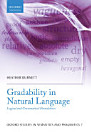
This book presents a novel semantic account of weak, or selective, islands. Weak islands are configurations that block the displacement of certain elements in a sentence. Examples of island violations with acceptable counterexamples include '#How much wine haven't you drunk?' (but 'Which girl haven't you introduced to Mary?'), '#How does John regret that he danced at the party?' (but 'Who does John regret that he invited to the party?') or '#How much wine do you know whether you will produce?' (but 'Which glass of wine do you know whether you'll poison?'). For forty years or more, explanations of the unacceptability of these island constructions have been syntactic. Syntactic accounts have also provided some of the key empirical motivation for Chomsky's claim that universal grammar (UG) contains language independent abstract syntactic constraints. But syntactic accounts, however subtle, fail to explain why many weak island violations are made almost acceptable by modals and attitude verbs, as in 'How much wine aren't you allowed to drink?'; 'How fast do you hope Lewis didn't drive?'; or 'How does Romeo regret he was allowed to go to the party?' Dr Abrusán considers which contexts and expressions create - or are sensitive to - weak island violations, and examines the factors that go some way to curing them. She puts forward a semantic analysis to account for the unacceptability of violations of negative, presuppositional, quantificational and wh-islands. She explains why grammaticality violations can be obviated by certain modal expressions, and why and how far the grammaticality judgments of speakers depend on the context of the utterance. The book argues that there is no need to assume abstract syntactic rules in order to derive these facts; rather, they can be made to follow from independent semantic principles. If correct, this work has a fundamental consequence for the field of linguistics in general: it removes some of the most important reasons for postulating abstract syntactic rules as part of UG, and hence weakens the arguments for postulating a module of UG.
This book presents a novel semantic account of weak, or selective, islands. Weak islands are configurations that block the displacement of certain elements in a sentence. Examples of island violations with acceptable counterexamples include '#How much wine haven't you drunk?' (but 'Which girl hav...
Gundua zaidi
Kuhusu mwandishi
Márta Abrusán is a CNRS research scientist at the Institut de Recherche en Informatique de Toulouse at the Université Paul Sabatier. After her PhD in linguistics at MIT she was a postdoctoral fellow at the Collegium Budapest, the Institut Jean-Nicod in Paris and the universities of Oxford and Göttingen. Her published work includes papers in Linguistics and Philosophy, Natural Language Semantics, Semantics and Pragmatics and the Journal of Semantics.
Márta Abrusán is a CNRS research scientist at the Institut de Recherche en Informatique de Toulouse at the Université Paul Sabatier. After her PhD in linguistics at MIT she was a postdoctoral fellow at the Collegium Budapest, the Institut Jean-Nicod in Paris and the universities of Oxford and Göt...
Kadiria kitabu pepe hiki
Tupe maoni yako.
Kusoma maelezo
Simu mahiri na kompyuta vibao
Sakinisha programu ya Vitabu vya Google Play kwa ajili ya Android na iPad au iPhone. Itasawazishwa kiotomatiki kwenye akaunti yako na kukuruhusu usome vitabu mtandaoni au nje ya mtandao popote ulipo.
Kompyuta za kupakata na kompyuta
Unaweza kusikiliza vitabu vilivyonunuliwa kwenye Google Play wakati unatumia kivinjari cha kompyuta yako.
Visomaji pepe na vifaa vingine
Ili usome kwenye vifaa vya wino pepe kama vile visomaji vya vitabu pepe vya Kobo, utahitaji kupakua faili kisha ulihamishie kwenye kifaa chako. Fuatilia maagizo ya kina ya Kituo cha Usaidizi ili uhamishe faili kwenye visomaji vya vitabu pepe vinavyotumika.