Concerning the Spiritual in Art
Wassily Kandinsky
Nov 2022 · DigiCat
Ebook
69
Pages
family_home
Eligible
info
About this ebook
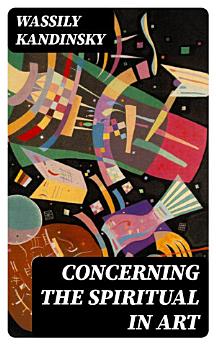
In "Concerning the Spiritual in Art," Wassily Kandinsky explores the transformative power of art and its deep-seated connections to the spiritual realm. Written in a lyrical and contemplative style, the book articulates Kandinsky's revolutionary theories about abstraction, color theory, and the emotive qualities of shapes and forms. Grounded in the early 20th-century avant-garde movement, this seminal work serves as a manifesto for the modernist ethos that emphasizes personal expression and eschews conventional representation, inviting readers to engage with art on a profoundly intuitive level. Wassily Kandinsky, a pioneer of abstract art, was profoundly influenced by his background in philosophy and his experiences as a musician. His journey to painting from a successful career in law is reflective of his belief in the interconnectivity of artistic expression across various disciplines. This unique vantage point invigorated his writing, making "Concerning the Spiritual in Art" not only a theoretical treatise but also a deeply personal exploration of artistic creation as a spiritual practice. This book is essential for anyone interested in the philosophy of art, modernist movements, or the relationship between creativity and spirituality. Kandinsky's insights resonate with artists, scholars, and art lovers alike, making it a timeless work that continues to inspire and provoke thought in today's artistic discourse.
In "Concerning the Spiritual in Art," Wassily Kandinsky explores the transformative power of art and its deep-seated connections to the spiritual realm. Written in a lyrical and contemplative style, the book articulates Kandinsky's revolutionary theories about abstraction, color theory, and the e...
Discover more
About the author
Wassili Kandinsky (1866–1944) was not only a pivotal figure in the development of abstract art; he was also a highly influential art theorist. Born in Moscow, Kandinsky spent his formative years in Odessa before attending the University of Moscow, where he studied law and economics. However, his passion for art led him to abandon a promising career in teaching to enroll at the Munich Academy at the age of 30. His experience in Germany would mark a significant transition in his life and work, as Kandinsky immersed himself in the avant-garde circles and began to develop his distinct abstract style. Kandinsky's interest in color theory and its relation to human psychology prompted the creation of his seminal text, 'Concerning the Spiritual in Art' (1910). In this book, he explored the idea that abstract colors and forms can express the 'inner necessity' of the artist and evoke profound emotional responses in the viewer. The book itself was a crucial text in the development of abstract art and laid the groundwork for much of Kandinsky's later work. His incorporation of musical terms like 'composition' and 'improvisation' encapsulated his pursuit to achieve harmony and expressivity akin to music in visual arts. Kandinsky, a prolific writer, continued to elucidate his artistic principles in his writings, while his paintings pushed the boundaries of abstraction, influencing generations of artists to come.
Wassili Kandinsky (1866–1944) was not only a pivotal figure in the development of abstract art; he was also a highly influential art theorist. Born in Moscow, Kandinsky spent his formative years in Odessa before attending the University of Moscow, where he studied law and economics. However, his ...
Rate this ebook
Tell us what you think.
Reading information
Smartphones and tablets
Install the Google Play Books app for Android and iPad/iPhone. It syncs automatically with your account and allows you to read online or offline wherever you are.
Laptops and computers
You can listen to audiobooks purchased on Google Play using your computer's web browser.
eReaders and other devices
To read on e-ink devices like Kobo eReaders, you'll need to download a file and transfer it to your device. Follow the detailed Help Center instructions to transfer the files to supported eReaders.