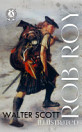
About this ebook
Waverly (1814) virtually inaugurates the historical novel, entwining Edward's education with the Jacobite Rising of 1745. Stationed in Scotland, the ingenuous officer drifts from Hanoverian loyalty toward Fergus and Flora Mac-Ivor, counterpoised by Rose Bradwardine and her whimsical Baron. Scott's digressive, ironic narrator layers dialect, humor, and antiquarian detail across settings from Tully-Veolan to Prestonpans, balancing romance with skeptical realism to meditate on loyalty, modernization, and the forging of British identity. Scott—lawyer, ballad-collector, and Sheriff-Depute—married Enlightenment training to Tory sympathy for order and tradition. Years of legal practice and fieldwork among Borders and Highlands, plus conversations with Jacobite descendants, furnished the novel's documentary texture. Writing anonymously, he sought to reconcile Scotland's fractured past with a commercial, imperial present and to preserve vanishing customs without sentimental falsification. For readers of historical fiction, political history, and the literature of national identity, Waverly remains indispensable: adventurous yet reflective, generous in sympathy yet clear-eyed about rebellion's costs. Begin here to see how the modern historical novel was made—and why later writers learned history by learning Scott. Quickie Classics summarizes timeless works with precision, preserving the author's voice and keeping the prose clear, fast, and readable—distilled, never diluted. Enriched Edition extras: Introduction · Synopsis · Historical Context · Author Biography · Brief Analysis · 4 Reflection Q&As · Editorial Footnotes.
Waverly (1814) virtually inaugurates the historical novel, entwining Edward's education with the Jacobite Rising of 1745. Stationed in Scotland, the ingenuous officer drifts from Hanoverian loyalty toward Fergus and Flora Mac-Ivor, counterpoised by Rose Bradwardine and her whimsical Baron. Scott'...
Discover more
About the author
Sir Walter Scott, 1st Baronet (1771–1832) was a towering figure in the pantheon of British literature and is often celebrated for his role as one of the principal architects of the historical novel genre. Born in Edinburgh, Scotland, Scott was an ardent student of his country's history and folklore, elements he deftly wove into his literary creations. His prodigious career as a writer began with the translation of works from German, but he soon turned to poetry and achieved fame with titles such as 'The Lay of the Last Minstrel' (1805) and 'Marmion' (1808). However, it is for his novels that he is most enduringly remembered, particularly the series known as the Waverley Novels. The eponymous 'Waverley' (1814), often cited as the first historical novel, provides a rich and detailed view of 18th century Scotland. Scott's narrative style in 'Waverley' combines a keen sense for historical context with a romanticized but insightful portrayal of societal structures and characters, a pattern he replicated with considerable success in subsequent novels. Scott's influence on later writers, Scottish literature, and the historical genre is immense, and his works continue to be studied for their cultural and historical significance. His approach to blending real historical events and figures with fiction laid the groundwork for generations of historical novelists to come.
Sir Walter Scott, 1st Baronet (1771–1832) was a towering figure in the pantheon of British literature and is often celebrated for his role as one of the principal architects of the historical novel genre. Born in Edinburgh, Scotland, Scott was an ardent student of his country's history and folklo...
Rate this ebook
Tell us what you think.
Reading information
Smartphones and tablets
Install the Google Play Books app for Android and iPad/iPhone. It syncs automatically with your account and allows you to read online or offline wherever you are.
Laptops and computers
You can listen to audiobooks purchased on Google Play using your computer's web browser.
eReaders and other devices
To read on e-ink devices like Kobo eReaders, you'll need to download a file and transfer it to your device. Follow the detailed Help Center instructions to transfer the files to supported eReaders.