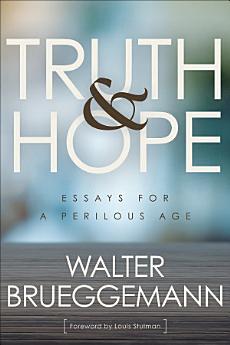
Truth and Hope: Essays for a Perilous Age
About this ebook
That same prophetic tradition (like many others) turns eventually to the work of hope-telling. Such hope does not doubt that the faithful God can create futures, a way out of no way. The sequence from truth to hope in the book of Jeremiah is characteristic of the prophetic books of the Old Testament. These several prophetic voices (that gave canonical shape to the prophetic books) knew that this sequence is definingly important. There can be no hope until truth is told. Our temptation, of course, is to do the work of hope without the prior work of truth.
Readers will find this collection of essays to be theologically rooted in the concept of prophetic tradition as a means of truth-telling. Brueggemann explores that, without God, truth-telling is nothing more than harping, and hope-telling is only wishful thinking.
Discover more
About the author
Walter Brueggemann is William Marcellus McPheeters Professor Emeritus of Old Testament at Columbia Theological Seminary. An ordained minister in the United Church of Christ, he is the author of dozens of books, including Sabbath as Resistance: Saying No to the Culture of Now, Interrupting Silence: God's Command to Speak Out, and Truth and Hope: Essays for a Perilous Age.