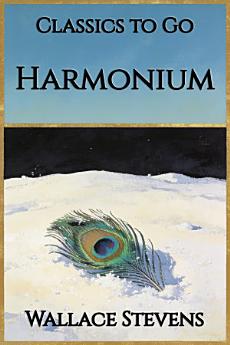
Harmonium: Restored Classics to Go Edition
About this ebook
About the author
Wallace Stevens was an American poet whose life moved between the practical world of business and the imaginative freedom of poetry, a dual existence that shaped his distinctive voice. Born in Pennsylvania in 1879, he studied at Harvard Law School, worked for insurance companies in New York and Hartford, and wrote much of his most important poetry while maintaining a career outside the literary spotlight. Though he published relatively late and never sought celebrity, he became one of the central figures of modern American poetry, admired for his musical language, philosophical depth, and inventive approach to the relationship between reality and imagination. His work often explores how the mind creates meaning, how beauty can transform ordinary life, and how art helps us face uncertainty, loss, and change. These concerns still feel urgently contemporary in a world saturated with competing truths and shifting realities. Stevens's legacy lies in his ability to make abstract thought sensuous and emotionally resonant, proving that poetry can be both intellectually challenging and deeply humane. Readers who enjoy meditative, richly textured verse, philosophical reflections on perception, and poems that reward close attention will find him especially rewarding.