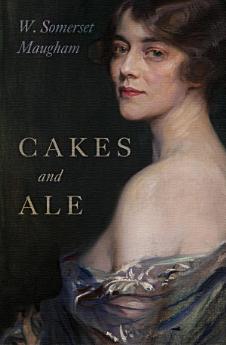
Cakes and Ale
About this ebook
To London's intellectual elite, Edward Driffield was the "Last of the Victorians," a novelist whose works defined an era and shaped English literature. This is how his widow Amy Driffield wishes for her husband to be remembered—and how she asks author Alroy Kear to pen Edward's biography and preserve his legend.
With only a little knowledge of Driffield's early career, Kear turns to yet another author, William Ashenden, for insight into the great writer's life. Ashenden was just a teenager when he met Driffield in Kent County's seaside town of Blackstable, spending time with the burgeoning novelist and his first wife Rose, a vivacious barmaid with a wicked reputation.
A few years later in London when he was a medical student, Ashenden encountered the Driffields again, getting swept up into their bohemian lifestyle. While Edward's literary star rises, Rose follows her own muses, enjoying the company of the city's artists—and engaging in an affair with Ashenden. The affair and the marriage both end when Rose vanishes without warning, running away with another man.
While both Driffield's widow and Kear are determined to minimize Rose's role in the author's life and career, Ashenden remembers Rose as an inspiring force of nature to everyone she encountered, especially the genius of Edward Driffield.
"An extraordinary work" — The New Yorker
"Perfectly priceless writing." — Chicago Tribune
Discover more
About the author
W. Somerset Maugham (1874–1964) was a British novelist, playwright, and short story writer. Maugham studied medicine, later becoming a surgeon. In 1897, he published his first novel, Liza of Lambeth, which became so popular he took up writing full-time. By 1914, Maugham was famous, having published ten novels and produced ten plays. During World War I, he served as an ambulance driver—and occasional spy—and continued to write, publishing the controversial autobiographical novel Of Human Bondage (1915), one of his best-known works.