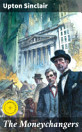
The Moneychangers
Aug 2022 · DigiCat
Ebook
158
Pages
family_home
Eligible
info
About this ebook
Upton Sinclair's "The Moneychangers" is a keenly observed social novel that exposes the intricacies and ethical dilemmas of the finance world during the early 20th century. Set against the backdrop of a rapidly industrializing America, the narrative follows the lives of two men—one idealistic and the other opportunistic—as they navigate the high-stakes world of banking and investment. Sinclair employs a vivid and gripping literary style, using dialogue and rich character development to critique capitalism's moral decay, and grounding his narrative within the context of the Progressive Era's social reforms. His exploration of greed and corruption is interwoven with a cautionary tale about the dangers of unchecked financial power, reflecting the economic turmoil of the time. Upton Sinclair, a seminal figure in American literature and social reform, drew from his own experience as a journalist and muckraker to illuminate systemic injustices in society. His previous works, particularly "The Jungle," positioned him as a fierce advocate for social change, and "The Moneychangers" reflects his consistent preoccupation with the intersection of morality and economic power. Sinclair's insights into the banking industry were undoubtedly influenced by the historical context of the Financial Panic of 1907 and other major events of his era. For readers interested in the ethical implications of capitalism, "The Moneychangers" serves as a compelling and timely reminder of the consequences of financial greed. Sinclair's incisive writing offers not only a gripping narrative but also an invitation to reflect on contemporary economic issues. This book stands as a vital exploration of the human condition within the realms of wealth, power, and morality, making it a must-read for scholars, economists, and anyone concerned with the ethical frameworks that govern our society.
Upton Sinclair's "The Moneychangers" is a keenly observed social novel that exposes the intricacies and ethical dilemmas of the finance world during the early 20th century. Set against the backdrop of a rapidly industrializing America, the narrative follows the lives of two men—one idealistic and...
Discover more
About the author
Upton Sinclair (1878–1968) was an American author with a passion for social reform, whose work reflected his deep interest in the struggles of the working class and the effects of capitalism on society. His literary contributions stretched across many genres, including novels, plays, and essays, but he is best remembered for his muckraking novel, 'The Jungle' (1906), which exposed the harsh realities of the American meatpacking industry, leading to reforms in food safety standards. Sinclair's concern with social justice also permeates through 'The Moneychangers' (1908), a novel that delves into the speculative financial practices of Wall Street and what he perceived as the vast corruption within the banking industry. Such works exemplify his commitment to blending narrative with social critique, a hallmark of his literary style that leverages realism and investigative precision. Sinclair's articulation of the societal ills of the early 20th century galvanized public opinion and influenced legislation, evidencing his belief in the power of the written word to enact change. Despite facing criticism and political backlash for his outspoken socialist views, Sinclair's writing continued to challenge the status quo, earning him a Pulitzer Prize for Fiction for 'Dragon's Teeth' (1942). His extensive canon of over 90 books is a testament to his prodigious career and enduring impact on American literature and social thought.
Upton Sinclair (1878–1968) was an American author with a passion for social reform, whose work reflected his deep interest in the struggles of the working class and the effects of capitalism on society. His literary contributions stretched across many genres, including novels, plays, and essays, ...
Rate this ebook
Tell us what you think.
Reading information
Smartphones and tablets
Install the Google Play Books app for Android and iPad/iPhone. It syncs automatically with your account and allows you to read online or offline wherever you are.
Laptops and computers
You can listen to audiobooks purchased on Google Play using your computer's web browser.
eReaders and other devices
To read on e-ink devices like Kobo eReaders, you'll need to download a file and transfer it to your device. Follow the detailed Help Center instructions to transfer the files to supported eReaders.