About this ebook
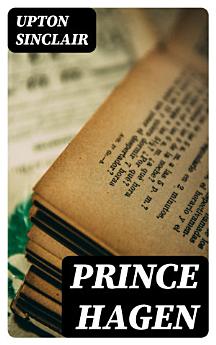
In 'Prince Hagen,' Upton Sinclair uses the allegorical power of fantasy to dissect the foundational structures of early 20th-century capitalism. This narrative, rich in socio-political commentary, follows the unearthly Nibelung as he wields his boundless wealth to expose the crude mechanisms of greed and inequality inherent in modern society. Sinclair's literary style in this work differs significantly from his prototypical muckraking approach, allowing for a more elusive and symbolist presentation of his ideas. The novel's interplay between the fantastic and the critical creates a unique literary context that juxtaposes the mythical with the realities of the American socio-economic landscape. Upton Sinclair, an American author and muckraker par excellence, was best known for his relentless crusade against social injustice. Sinclair's firm commitment to workers' rights and economic reform is evident in his extensive body of work, including 'The Jungle,' which exposed the deplorable conditions of the meatpacking industry. This impassioned sense of social purpose informed his creation of 'Prince Hagen,' a work that leverages the fantastical narrative to critique real-world issues, notably the corrupting influence of money and power. As a reimagining, the novel-turned-play encapsulates Sinclair's adaptability and enduring dedication to addressing social ills through his art. 'Prince Hagen' is recommended for readers with an interest in early 20th-century American literature, social criticism, and the genre-bending use of fantasy to reflect societal concerns. Sinclair's exploration of avarice and moral corrosion through the engaging tale of Nibelung not only provides intellectual substance but also serves as a formidable critique that resonates with contemporary issues of economic inequity and the ethical challenges within capitalist societies. For scholars and lay readers alike, this novel offers a stimulating departure from Sinclair's non-fiction exposés and a novel perspective on the perennial conflicts between wealth, power, and social justice.
In 'Prince Hagen,' Upton Sinclair uses the allegorical power of fantasy to dissect the foundational structures of early 20th-century capitalism. This narrative, rich in socio-political commentary, follows the unearthly Nibelung as he wields his boundless wealth to expose the crude mechanisms of g...
Discover more
About the author
Upton Sinclair (1878-1968) was a prolific American author, activist, and political figure best known for his novel 'The Jungle' (1906), which exposed the harsh conditions and exploited lives of immigrants in the United States meatpacking industry. Born in Baltimore, Maryland, Sinclair was a dominant figure in American literature and politics for nearly six decades. His body of work reflects deep-seated convictions about social justice, and he wrote in a style that combined journalistic reporting with narrative fiction, aiming to incite public outcry and political change. Sinclair's literary career was marked by its variety, having written nearly 100 books in various genres. Among his works, 'Prince Hagen' (1903), a lesser-known title compared to his muckraking masterpieces, is a satirical fantasy that explores themes of power and corruption—not uncommon topics in Sinclair's oeuvre. While this political parable did not reach the same fame, it still showcases Sinclair's skillful blend of social commentary with storytelling. Sinclair was awarded the Pulitzer Prize for Fiction in 1943 for his novel 'Dragon's Teeth,' a testament to his significant contribution to American literature. Throughout his career, Sinclair's writings not only shaped public opinion but also left an indelible mark on progressive politics and reform in the 20th century.
Upton Sinclair (1878-1968) was a prolific American author, activist, and political figure best known for his novel 'The Jungle' (1906), which exposed the harsh conditions and exploited lives of immigrants in the United States meatpacking industry. Born in Baltimore, Maryland, Sinclair was a domin...
Rate this ebook
Tell us what you think.
Reading information
Smartphones and tablets
Install the Google Play Books app for Android and iPad/iPhone. It syncs automatically with your account and allows you to read online or offline wherever you are.
Laptops and computers
You can listen to audiobooks purchased on Google Play using your computer's web browser.
eReaders and other devices
To read on e-ink devices like Kobo eReaders, you'll need to download a file and transfer it to your device. Follow the detailed Help Center instructions to transfer the files to supported eReaders.