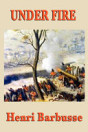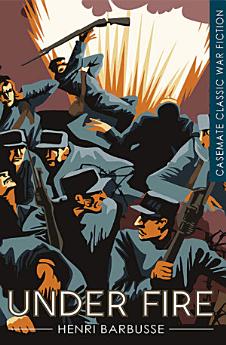
Under Fire
août 2016 · Casemate Classic War Fiction Livre 4 · Open Road Media
E-book
206
Pages
family_home
Éligible
info
À propos de cet e-book
The original translation of one of the first World War I novels—at first criticized for its harsh realism but now celebrated as a classic.
Set in early 1916, Under Fire follows the point of view of an unnamed foot soldier in a squad of French volunteers on the western front. It combines soaring, poetic descriptions with the mundane, messy, human reality of soldiers living in their own filth. Gradually, names and features are given to the men who emerge from the mud, from the dignified leader, Corporal Bertrand, to the ebullient Volpatte and the obsessive Cocon.
Intermingled with details of how the men navigate daily life in the putrefied atmosphere of the trenches is a political, pacifist argument about this war and war more generally. Caught up in events they cannot control, the soldiers go through their daily routines: foraging for food, reading letters from wives and mothers, drinking, fighting in battle, and, in harrowing scenes for which the novel is noted, discovering dead bodies in advanced stages of decomposition. Through it all, they talk about the war, attempting to make sense of the altered world in which they find themselves.
Under Fire (originally published in French as Le Feu) drew criticism at the time of its publication for its brutal detail, but went on to win the Prix Goncourt, a prestigious literary award that Henri Barbusse—a World War I soldier who wrote from vivid, painful experience—shares with renowned authors such as Marcel Proust and Marguerite Duras. Here, the original translation by William Fitzwater Wray, which first appeared in 1917, captures both the intensity of the story and the essence of the era. A glossary is also provided.
The original translation of one of the first World War I novels—at first criticized for its harsh realism but now celebrated as a classic.
Set in early 1916, Under Fire follows the point of view of an unnamed foot soldier in a squad of French volunteers on the western front. It combines soaring,...
En voir d'autres
À propos de l'auteur
Henri Barbusse (1873–1935) enlisted in the French army in 1914 and served against Germany in World War I. Invalided out of the army three times, he served in the war for seventeen months, until the end of 1915, when he was permanently moved into a clerical position due to pulmonary damage, exhaustion, and dysentery. Barbusse first came to fame with the 1917 publication of his novel Le Feu (translated by William Fitzwater Wray as Under Fire), which was based on his experiences during World War I. By this time, Barbusse had become a pacifist, and his writing demonstrated his growing hatred of militarism. He then moved to Moscow for a time, married a Russian woman, and joined the French Communist Party.
Henri Barbusse (1873–1935) enlisted in the French army in 1914 and served against Germany in World War I. Invalided out of the army three times, he served in the war for seventeen months, until the end of 1915, when he was permanently moved into a clerical position due to pulmonary damage, exhaus...
Donner une note à cet e-book
Dites-nous ce que vous en pensez.
Informations sur la lecture
Smartphones et tablettes
Installez l'application Google Play Livres pour Android et iPad ou iPhone. Elle se synchronise automatiquement avec votre compte et vous permet de lire des livres en ligne ou hors connexion, où que vous soyez.
Ordinateurs portables et de bureau
Vous pouvez écouter les livres audio achetés sur Google Play à l'aide du navigateur Web de votre ordinateur.
Liseuses et autres appareils
Pour lire sur des appareils e-Ink, comme les liseuses Kobo, vous devez télécharger un fichier et le transférer sur l'appareil en question. Suivez les instructions détaillées du Centre d'aide pour transférer les fichiers sur les liseuses compatibles.