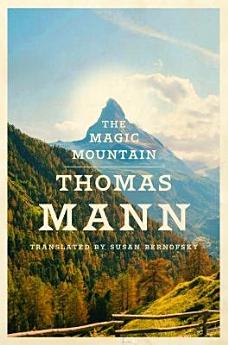
The Magic Mountain
About this ebook
Thomas Mann’s supreme achievement, The Magic Mountain is a novel of astonishing philosophical complexity and formal brilliance. Sometimes forgotten is that it is also, at its heart, an emotionally resonant fairy-tale. Its guileless hero, a “simple young fellow” named Hans Castorp, travels to a snowbound Swiss sanatorium where an eclectic cast of characters spends their days dining, reclining, and debating ideas as Europe marches steadily toward World War?I. Employing a remarkable self-imposed constraint of using only English words that mean now what they meant in Mann’s era, award-winning and best-selling translator Susan Bernofsky gives us not only a biting, mordantly funny philosophical satire, but also a charming tale of one man’s coming-of-age. This is the version of The Magic Mountain that can justifiably claim, in Bernofsky’s own words, to be “the fairy-tale one”—a translation that is simultaneously for our time and timeless.
Discover more
About the author
Thomas Mann, a member of a Hanseatic family with deep roots in Lübeck, was arguably Germany’s most famous twentieth-century writer. In 1929, he was awarded the Nobel Prize in Literature.
Susan Bernofsky has translated works by Franz Kafka and Hermann Hesse, among others, and is the recipient of many awards, including the Helen and Kurt Wolff Prize. She is the director of the literary translation program at Columbia University and lives in New York.