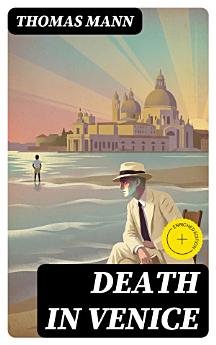
Death in Venice: Enriched edition. A Modernist Novella of Obsession, Beauty, and Mortality amid Venice's Decay
Nov 2023 · DigiCat
Ebook
72
Pages
family_home
Eligible
info
About this ebook
In "Death in Venice," Thomas Mann masterfully intertwines themes of desire, beauty, and existential reflection through the poignant tale of Gustav von Aschenbach, a middle-aged writer whose obsessive infatuation with a young boy, Tadzio, leads him into a moral quandary. Mann employs a rich, lyrical prose style, blending realism with symbolic elements that explore the dichotomy of art and life. Set against the backdrop of a decaying Venice, the novella reflects the modernist preoccupation with the depths of human psychology and the existential crises faced by individuals in a rapidly changing world, serving as a meditation on the destructive nature of unchecked passion and the inevitability of death. Thomas Mann, a Nobel Prize-winning author and prominent figure in early 20th-century literature, often grappled with the themes of decadence and the tensions between sexuality and morality in his works. "Death in Venice" draws on Mann's experiences and observations from his travels, particularly in Venice, a city that symbolizes both beauty and decay, thus crystallizing his fascination with the artistic and ethical dilemmas faced by the individual. This novella is essential for those seeking to understand the complexities of the human condition and the delicate balance between aesthetic appreciation and moral obligation. Mann's exploration of beauty and desire serves as a timeless reflection that resonates with contemporary readers, making "Death in Venice" a must-read for anyone interested in the interplay of art and human emotion. In this enriched edition, we have carefully created added value for your reading experience: - A succinct Introduction situates the work's timeless appeal and themes. - The Synopsis outlines the central plot, highlighting key developments without spoiling critical twists. - A detailed Historical Context immerses you in the era's events and influences that shaped the writing. - An Author Biography reveals milestones in the author's life, illuminating the personal insights behind the text. - A thorough Analysis dissects symbols, motifs, and character arcs to unearth underlying meanings. - Reflection questions prompt you to engage personally with the work's messages, connecting them to modern life. - Hand‐picked Memorable Quotes shine a spotlight on moments of literary brilliance. - Interactive footnotes clarify unusual references, historical allusions, and archaic phrases for an effortless, more informed read.
In "Death in Venice," Thomas Mann masterfully intertwines themes of desire, beauty, and existential reflection through the poignant tale of Gustav von Aschenbach, a middle-aged writer whose obsessive infatuation with a young boy, Tadzio, leads him into a moral quandary. Mann employs a rich, lyric...
Discover more
About the author
Thomas Mann (1875-1955), the German novelist, short story writer, social critic, philanthropist, essayist, and the 1929 Nobel Prize in Literature laureate, is regarded as one of the foremost novelists of the twentieth century. Mann's literary work is noted for its deep psychological insight, analysis of the artist's mind, and its embedding within the broader context of contemporary history and philosophy. His writing is often associated with the tradition of Bildungsroman, a genre that delves into an individual's personal development. 'Death in Venice' (1912), one of Mann's most celebrated novellas was an astounding revelation of the nuance of aestheticism and the torment of writerly obsession, portraying the tragic demise of the protagonist Gustav von Aschenbach, who is consumed by his infatuation with a young boy in Venice amidst a cholera outbreak. The novella has been widely studied for its complex themes of beauty, decay, and the struggles of artistic creation. Mann's intricate narrative style often flirts with symbolism and irony, positioning his literature in a sphere where the personal is effortlessly interwoven with the broad strokes of societal transformations. His works not only reflect his era's social undercurrents but also continue to resonate with contemporary debates on culture, morality, and human psychology.
Thomas Mann (1875-1955), the German novelist, short story writer, social critic, philanthropist, essayist, and the 1929 Nobel Prize in Literature laureate, is regarded as one of the foremost novelists of the twentieth century. Mann's literary work is noted for its deep psychological insight, anal...
Rate this ebook
Tell us what you think.
Reading information
Smartphones and tablets
Install the Google Play Books app for Android and iPad/iPhone. It syncs automatically with your account and allows you to read online or offline wherever you are.
Laptops and computers
You can listen to audiobooks purchased on Google Play using your computer's web browser.
eReaders and other devices
To read on e-ink devices like Kobo eReaders, you'll need to download a file and transfer it to your device. Follow the detailed Help Center instructions to transfer the files to supported eReaders.