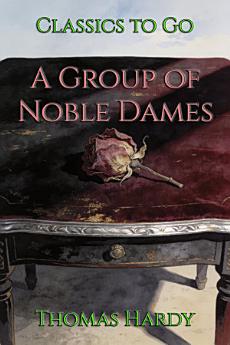
A Group of Noble Dames: Restored Classics to Go Edition
About this ebook
Discover more
About the author
Thomas Hardy was one of the great English novelists and poets of the nineteenth and early twentieth centuries, born in rural Dorset in 1840 and deeply shaped by the landscapes, customs, and social rhythms of Wessex, the fictionalized version of his native countryside that became central to his art. Originally trained as an architect, he turned to writing and went on to build a remarkable literary career that moved from fiction to poetry, especially after the public controversy surrounding some of his later novels. Across his work, Hardy explored the tension between human desire and social constraint, the fragility of happiness, the weight of class and convention, and the often indifferent power of fate and nature. His fiction and verse are admired for their psychological depth, tragic intensity, and vivid sense of place, while his sympathetic portrayals of ordinary people caught in larger forces continue to feel strikingly modern. He remains significant not only as a master storyteller but also as a writer who challenged Victorian assumptions about morality, marriage, and progress, making room for a more complex and often darker view of human life. Today, readers still turn to Hardy for his beautiful prose, his unsparing honesty, and his ability to make local lives feel universal. He will especially appeal to readers who love richly atmospheric fiction, moral complexity, and stories that linger long after the final page.