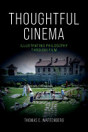
Thoughtful Images: Illustrating Philosophy Through Art
Jan 2023 · Oxford University Press
Ebook
324
Pages
family_home
Eligible
info
About this ebook
Thoughtful Images demonstrates that there is a rich tradition of illustrations of philosophy that originated in Ancient Greece, spread throughout Europe, thrived in twentieth century America, and continues to this day. It is the first book to isolate this tradition and to explain its relevance for both philosophy and art. It's not surprising that philosophers and others have not acknowledged the existence of this artistic tradition. Illustration is not generally regarded as a genuine art form on a par with painting and sculpture and many believe that the abstract claims made by philosophers are not amenable to being rendered in visual images. Wartenberg shows that the denigration of illustration as an art form is misguided in a number of ways. The book argues that great works of art such as Titian's Rape of Europa are actually illustrations of literary texts--Ovid's Metamorphoses in Titian's case. This undermines the attempt to diminish the artistic achievement of illustrations by seeing them as an inferior art form to painting. That the abstract claims and theories put forward by philosophers are amenable to illustration is supported by the examples discussed in the balance of the book. These examples include illuminated Medieval manuscripts featuring illustrations of Aristotle's ethical theories; the frontispieces of philosophical works in the 17th and 18th century; Friedrich Nietzsche's, Martin Heidegger's, and Michel Foucault's use of paintings to illustrate their theories; the modernist tradition in which art is seen as a form of philosophy; conceptual artists' creation of works that explicitly include ideas taken from Ludwig Wittgenstein's writings; and works of what the author calls “graphic philosophy”--comic books that include visual representations of philosophical ideas.
Thoughtful Images demonstrates that there is a rich tradition of illustrations of philosophy that originated in Ancient Greece, spread throughout Europe, thrived in twentieth century America, and continues to this day. It is the first book to isolate this tradition and to explain its relevance fo...
Discover more
Rate this ebook
Tell us what you think.
Reading information
Smartphones and tablets
Install the Google Play Books app for Android and iPad/iPhone. It syncs automatically with your account and allows you to read online or offline wherever you are.
Laptops and computers
You can listen to audiobooks purchased on Google Play using your computer's web browser.
eReaders and other devices
To read on e-ink devices like Kobo eReaders, you'll need to download a file and transfer it to your device. Follow the detailed Help Center instructions to transfer the files to supported eReaders.