מידע על הספר הדיגיטלי הזה
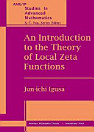
The theory of theta functions has a long history; for this, we refer A. Krazer and W. Wirtinger the reader to an encyclopedia article by ("Sources" [9]). We shall restrict ourselves to postwar, i. e., after 1945, periods. Around 1948/49, F. Conforto, c. L. Siegel, A. Well reconsidered the main existence theorems of theta functions and found natural proofs for them. These are contained in Conforto: Abelsche Funktionen und algebraische Geometrie, Springer (1956); Siegel: Analytic functions of several complex variables, Lect. Notes, I.A.S. (1948/49); Well: Theoremes fondamentaux de la theorie des fonctions theta, Sem. Bourbaki, No. 16 (1949). The complete account of Weil's method appeared in his book of 1958 [20]. The next important achievement was the theory of compacti fication of the quotient variety of Siegel's upper-half space by a modular group. There are many ways to compactify the quotient variety; we are talking about what might be called a standard compactification. Such a compactification was obtained first as a Hausdorff space by I. Satake in "On the compactification of the Siegel space", J. Ind. Math. Soc. 20, 259-281 (1956), and as a normal projective variety by W.L. Baily in 1958 [1]. In 1957/58, H. Cartan took up this theory in his seminar [3]; it was shown that the graded ring of modular forms relative to the given modular group is a normal integral domain which is finitely generated over C
The theory of theta functions has a long history; for this, we refer A. Krazer and W. Wirtinger the reader to an encyclopedia article by ("Sources" [9]). We shall restrict ourselves to postwar, i. e., after 1945, periods. Around 1948/49, F. Conforto, c. L. Siegel, A. Well reconsidered the main ex...
עוד ספרים
רוצה לדרג את הספר הדיגיטלי הזה?
נשמח לשמוע מה דעתך.
איך קוראים את הספר
סמארטפונים וטאבלטים
כל מה שצריך לעשות הוא להתקין את האפליקציה של Google Play Books ל-Android או ל-iPad/iPhone. היא מסתנכרנת באופן אוטומטי עם החשבון שלך ומאפשרת לך לקרוא מכל מקום, גם ללא חיבור לאינטרנט.
מחשבים ניידים ושולחניים
ניתן להאזין לספרי אודיו שנרכשו ב-Google Play באמצעות דפדפן האינטרנט של המחשב.
eReaders ומכשירים אחרים
כדי לקרוא במכשירים עם תצוגת דיו אלקטרוני (e-ink) כמו הקוראים האלקטרוניים של Kobo, צריך להוריד קובץ ולהעביר אותו למכשיר. יש לפעול לפי ההוראות המפורטות במרכז העזרה כדי להעביר את הקבצים לקוראים אלקטרוניים נתמכים.