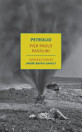
Theorem
lis 2023 · New York Review of Books
E-book
208
Strony
Narzędzia
info
family_home
Odpowiednia
info
Informacje o e-booku
This tale about seduction, obsession, family, and the confines of capitalism is one of director Pier Paolo Pasolini's most fascinating creations, based on his transcendent film of the same name.
Theorem is the most enigmatic of Pier Paolo Pasolini’s four novels. The book started as a poem and took shape both as a work of fiction and a film, also called Theorem, released the same year. In short prose chapters interspersed with stark passages of poetry, Pasolini tells a story of transfiguration and trauma.
To the suburban mansion of a prosperous Milanese businessman comes a mysterious and beautiful young man who invites himself to stay. From the beginning he exercises a strange fascination on the inhabitants of the house, and soon everyone, from the busy father to the frustrated mother, from the yearning daughter to the weak-willed son to the housemaid from the country, has fallen in love with him. Then, as mysteriously as he appeared, the infatuating young man departs. How will these people he has touched so deeply do without him? Is there a passage out of the spiritual desert of modern capitalism into a new awakening, both of the senses and of the soul? Only questions remain at the end of a book that is at once a bedroom comedy, a political novel, and a religious parable.
Theorem is the most enigmatic of Pier Paolo Pasolini’s four novels. The book started as a poem and took shape both as a work of fiction and a film, also called Theorem, released the same year. In short prose chapters interspersed with stark passages of poetry, Pasolini tells a story of transfiguration and trauma.
To the suburban mansion of a prosperous Milanese businessman comes a mysterious and beautiful young man who invites himself to stay. From the beginning he exercises a strange fascination on the inhabitants of the house, and soon everyone, from the busy father to the frustrated mother, from the yearning daughter to the weak-willed son to the housemaid from the country, has fallen in love with him. Then, as mysteriously as he appeared, the infatuating young man departs. How will these people he has touched so deeply do without him? Is there a passage out of the spiritual desert of modern capitalism into a new awakening, both of the senses and of the soul? Only questions remain at the end of a book that is at once a bedroom comedy, a political novel, and a religious parable.
This tale about seduction, obsession, family, and the confines of capitalism is one of director Pier Paolo Pasolini's most fascinating creations, based on his transcendent film of the same name.
Theorem is the most enigmatic of Pier Paolo Pasolini’s four novels. The book started as a poem and to...
Zobacz więcej
O autorze
Pier Paolo Pasolini (1922-1972) was an Italian filmmaker and writer known for his defiance of the political, social, and artistic status quos of postwar Italy. In his work across mediums, he broached taboo topics in relation to sexuality, religion, and the condition of the poor. In the 1950s, he became well-known in Italy for his novels and poetry, winning the Viareggio Prize for the latter in 1957. In the 1960s and 70s, he was catapulted to international fame for his films, including The Gospel According to Saint Matthew, Mamma Roma, Salò, Oedipus Rex, and The Hawks and the Sparrows.
Stuart Hood (1915-2011) was a Scottish translator, novelist, and television executive for BBC. During WWII, he served as an intelligence officer, was held as an Italian prisoner of war, and eventually became a leader in the Italian resistance, as is recounted in his memoir Pebbles from My Skull. His forty-plus translations include works by Ernst Jünger, Erich Fried, Dino Buzzati, and Dario Fo.
Stuart Hood (1915-2011) was a Scottish translator, novelist, and television executive for BBC. During WWII, he served as an intelligence officer, was held as an Italian prisoner of war, and eventually became a leader in the Italian resistance, as is recounted in his memoir Pebbles from My Skull. His forty-plus translations include works by Ernst Jünger, Erich Fried, Dino Buzzati, and Dario Fo.
Pier Paolo Pasolini (1922-1972) was an Italian filmmaker and writer known for his defiance of the political, social, and artistic status quos of postwar Italy. In his work across mediums, he broached taboo topics in relation to sexuality, religion, and the condition of the poor. In the 1950s, he ...
Oceń tego e-booka
Podziel się z nami swoją opinią.
Informacje o czytaniu
Smartfony i tablety
Zainstaluj aplikację Książki Google Play na Androida i iPada/iPhone'a. Synchronizuje się ona automatycznie z kontem i pozwala na czytanie w dowolnym miejscu, w trybie online i offline.
Laptopy i komputery
Audiobooków kupionych w Google Play możesz słuchać w przeglądarce internetowej na komputerze.
Czytniki e-booków i inne urządzenia
Aby czytać na e-papierze, na czytnikach takich jak Kobo, musisz pobrać plik i przesłać go na swoje urządzenie. Aby przesłać pliki na obsługiwany czytnik, postępuj zgodnie ze szczegółowymi instrukcjami z Centrum pomocy.