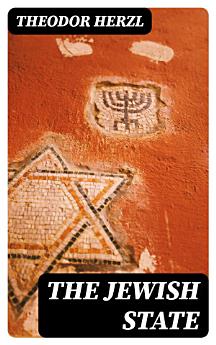
The Jewish State: Enriched edition. A Zionist Manifesto for Jewish Nationalism, Self-Determination, and a Practical Blueprint for Statehood
Theodor Herzl
Nov 2022 · DigiCat
Ebook
106
Pages
family_home
Eligible
info
About this ebook
In "The Jewish State," Theodor Herzl presents a profound and pioneering exploration of Jewish nationalism and the urgent need for a sovereign state for the Jewish people. Written in a direct and impassioned style, the book outlines Herzl's vision of political Zionism, arguing that the establishment of a Jewish homeland is vital for the safety and autonomy of Jewish communities facing persistent anti-Semitism. Contextually situated at the turn of the 20th century, the work encapsulates the socio-political climate of Europe, where Jews experienced growing hostility, offering both a manifesto and a practical blueprint for achieving statehood in Palestine. Theodor Herzl, a journalist and playwright originally from Budapest, was deeply moved by the Dreyfus Affair, which exposed the rampant anti-Semitism in Europe. This personal and societal crisis galvanized Herzl, motivating him to explore the political avenues available to secure Jewish self-determination. His background in law and his experiences in journalism informed his articulate arguments and strategic vision, making him a seminal figure in the Zionist movement. "The Jewish State" is essential reading for anyone interested in understanding the foundations of Israeli statehood and the complexities of Jewish identity. Herzl's work not only influences Zionist thought but also resonates in contemporary discussions of nationalism, making this text a critical piece of literature for scholars and lay readers alike. In this enriched edition, we have carefully created added value for your reading experience: - A succinct Introduction situates the work's timeless appeal and themes. - The Synopsis outlines the central plot, highlighting key developments without spoiling critical twists. - A detailed Historical Context immerses you in the era's events and influences that shaped the writing. - An Author Biography reveals milestones in the author's life, illuminating the personal insights behind the text. - A thorough Analysis dissects symbols, motifs, and character arcs to unearth underlying meanings. - Reflection questions prompt you to engage personally with the work's messages, connecting them to modern life. - Hand‐picked Memorable Quotes shine a spotlight on moments of literary brilliance. - Interactive footnotes clarify unusual references, historical allusions, and archaic phrases for an effortless, more informed read.
In "The Jewish State," Theodor Herzl presents a profound and pioneering exploration of Jewish nationalism and the urgent need for a sovereign state for the Jewish people. Written in a direct and impassioned style, the book outlines Herzl's vision of political Zionism, arguing that the establishme...
Discover more
About the author
Theodor Herzl, born on May 2, 1860, in Pest (now Budapest), Hungary, is prominently recognized as the father of modern political Zionism. A journalist, playwright, and visionary, Herzl advocated the establishment of a sovereign Jewish state, a radical notion that would reverberate through the annals of history, culminating in the founding of the State of Israel. In his groundbreaking 1896 pamphlet 'The Jewish State' ('Der Judenstaat'), Herzl articulated a detailed vision for the future of the Jewish people, a plan designed to end the systemic anti-Semitism they faced across Europe by creating a national homeland. A confluence of Herzl's astute observations as a correspondent, prescient political analyses, and impassioned prose led to the First Zionist Congress in Basel, Switzerland, in 1897, solidifying his status as a leading architect of the Zionist movement. His literary style, compelling and cogent, was instrumental in mobilizing a fragmented Jewish diaspora towards a unified political aim. Herzl succumbed to heart failure on July 3, 1904, but his legacy endures, enshrined in the foundations of a modern Israel and remembered for his tireless campaign towards Jewish self-determination.
Theodor Herzl, born on May 2, 1860, in Pest (now Budapest), Hungary, is prominently recognized as the father of modern political Zionism. A journalist, playwright, and visionary, Herzl advocated the establishment of a sovereign Jewish state, a radical notion that would reverberate through the ann...
Rate this ebook
Tell us what you think.
Reading information
Smartphones and tablets
Install the Google Play Books app for Android and iPad/iPhone. It syncs automatically with your account and allows you to read online or offline wherever you are.
Laptops and computers
You can listen to audiobooks purchased on Google Play using your computer's web browser.
eReaders and other devices
To read on e-ink devices like Kobo eReaders, you'll need to download a file and transfer it to your device. Follow the detailed Help Center instructions to transfer the files to supported eReaders.