eBook 정보
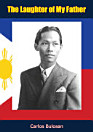
The present volume, which was first published in 1943, is a collection of poetry by Filipino-American novelist and poet Carlos Bulosan, written during the Second World War. It is his tribute to the soldiers who died fighting in the Battle of Bataan.
"Poems of Bataan—of that 'small island of ashes and dead bodies,' of the soldiers that resisted to the last man, of the hope of freedom once again. Impassioned lyrical expression of that struggle and the refusal to be conquered"—Kirkus Review
콘텐츠 둘러보기
저자 정보
Carlos Sampayan Bulosan (1911-1956) was an English-language Filipino novelist and poet who immigrated to America in 1930. His best-known work today is the semi-autobiographical America is in the Heart, but he first gained fame for his 1943 essay on The Freedom from Want.
Born to Ilocano parents in the Philippines in Binalonan, Pangasinan, Bulosan spent most of his youth in the countryside as a farmer. During his youth he and his family were economically impoverished by the rich and political elite, which would become one of the main themes of his writing.
Following the pattern of many Filipinos during the American colonial period, he left for America in 1930 at age 17, in the hope of finding salvation from the economic depression of his home. He never again saw his Philippine homeland. Upon arriving in Seattle, he began working low paying jobs. In 1936, Bulosan suffered from tuberculosis, underwent three operations, and spent two years mostly in the convalescent ward. During his long stay in the hospital, he spent his time reading and writing.
Following the release of America is in the Heart in 1946, he was celebrated for giving a post-colonial, Asian immigrant perspective to the labor movement in America, and for telling the experience of Filipinos working in the U.S. during the 1930s and 1940s. In the 1970s, with a resurgence in Asian/Pacific Islander American activism, his unpublished writings were discovered in a library in the University of Washington leading to posthumous releases of several unfinished works and anthologies of his poetry.
One of his most famous essays, published in March 1943, was chosen by The Saturday Evening Post to accompany its publication of the Norman Rockwell painting Freedom from Want, part of a series based on Franklin D. Roosevelt's "Four Freedoms" speech.
Bulosan died in Seattle on September 11, 1956, aged 42. He is buried at Mount Pleasant Cemetery on Queen Anne Hill in Seattle.