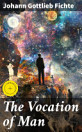
The Science of Knowledge
Johann Gottlieb Fichte
jan 1868 · Philadelphia : Lippincott
Libër elektronik
377
Faqe
Rreth këtij libri elektronik
Rreth autorit
Born into a poor family at Rammenau, Germany, Johann Gottlieb Fichte attracted the attention of a baron who had him educated at Pforta and then at the Universities of Jena, Wittenberg, and Leipzig with a view to a clerical career. Drawn to philosophy by the writings of Lessing and Spinoza, Fichte was converted to Kantianism in 1790 and went to Koenigsberg to visit Immanuel Kant, showing him the manuscript of a work on religion, his Attempt at a Critique of All Revelation. Kant helped to have it published in 1792; the work appeared anonymously, and reviewers thought it was the work of Kant himself. When the truth became known, Fichte won instant fame and was appointed a professor at Jena. Between 1794 and 1800, Fichte taught at Jena, his Theory of Science (1794) laying the ground for the German idealist movement. Fichte was dismissed from his professorship, however, ostensibly on grounds of atheism but actually because of his notoriously Jacobin political views and his difficult personality. He was welcomed in Berlin as a victim of religious persecution and briefly held a professorship at Erlangen before being named rector of the newly founded university in Berlin in 1810. Personal conflicts once again led to his resignation, but he retained the prestigious chair of philosophy until his death. Fichte's 1794 system of thought at Jena period was founded on the principle of individual human awareness of freedom. From this base Fichte attempted a transcendental deduction of all theoretical and practical categories including the category of passivity or sensibility, thus rejecting the Kantian doctrine of the thing-in-itself, all with the aim of rendering Kantian transcendental idealism less vulnerable to skeptical objections. Because Fichte's system was developed in haste, under the pressures of teaching at Jena, its aims and methods are obscure, and throughout his life Fichte attempted time and again to develop the basic ideas, shifting his position significantly over the years. During the Jena period Fichte also developed a system of natural right and ethics, providing for strong redistributive rights and responsibilities on the part of the state, with a view to insuring civil and economic equality of all citizens. After leaving Jena, Fichte's idealism became more metaphysical and religious in orientation, and his practical philosophy became more nationalistic, as exhibited in his inspirational Addresses to the German Nation (1808), reflecting his strong commitment to the cause of resisting the Napoleonic invasion. Fichte's Jena period system was decisive for the development of the speculative idealism of Schelling and Hegel; it is therefore decisive for the development of all continental thought since Kant. In 1813 Fichte's wife Johanna became ill with typhus when nursing soldiers in the struggle against Napoleon. She recovered, but Fichte caught the disease and died in 1814.
Born into a poor family at Rammenau, Germany, Johann Gottlieb Fichte attracted the attention of a baron who had him educated at Pforta and then at the Universities of Jena, Wittenberg, and Leipzig with a view to a clerical career. Drawn to philosophy by the writings of Lessing and Spinoza, Fichte...
Vlerëso këtë libër elektronik
Na trego se çfarë mendon.
Informacione për leximin
Telefona inteligjentë dhe tabletë
Instalo aplikacionin "Librat e Google Play" për Android dhe iPad/iPhone. Ai sinkronizohet automatikisht me llogarinë tënde dhe të lejon të lexosh online dhe offline kudo që të ndodhesh.
Laptopë dhe kompjuterë
Mund të dëgjosh librat me audio të blerë në Google Play duke përdorur shfletuesin e uebit të kompjuterit.
Lexuesit elektronikë dhe pajisjet e tjera
Për të lexuar në pajisjet me bojë elektronike si p.sh. lexuesit e librave elektronikë Kobo, do të të duhet të shkarkosh një skedar dhe ta transferosh atë te pajisja jote. Ndiq udhëzimet e detajuara në Qendrën e ndihmës për të transferuar skedarët te lexuesit e mbështetur të librave elektronikë.