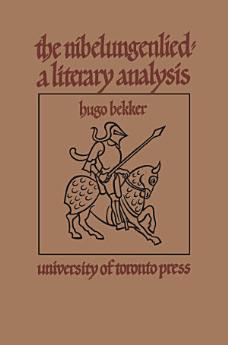
The Nibelungenlied: A Literary Analysis
Táto e‑kniha
Professor Bekker points out that the poet of the Nibelungenlied does not aim at psychological character delineation and deliberately refrains from seeking to establish the various prominent figures in the epic as individuals in the modern sense of the term. Instead, they emerge as representative figures whose interrelationships, though interesting, are less important for the unity and meaning of the epic than are their common relationships to the world in which they exist. The question of personal guilt or innocence becomes irrelevant, and Professor Bekker sees the work ultimately as poetic pageant of a noble way of life and its destruction. Symbolism, imagery, parallelism, symmetry, and other structural devices all contribute to the design which expresses the nature of this noble life, and Professor Bekker’s book is a valuable guide to the complex architecture of this thirteenth-century masterpiece.
O autorovi
Hugo Bekker was born in Burgh, The Netherlands. He studied at the University of Michigan, receiving his PHD in 1958, and taught at the University of Oregon for the next three years. He was Professor Emeritus in the Department of Germanic Languages and Literatures.