Um þessa rafbók
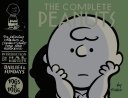
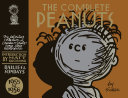
As the 1950s close down, Peanuts definitively enters its golden age. Linus, who had just learned to speak in the previous volume, becomes downright eloquent and even begins to fend off Lucy's bullying; even so, his security neurosis becomes more pronounced, including a harrowing two-week "Lost Weekend" sequence of blanketlessness. Charlie Brown cascades further down the hill to loserdom, with spectacularly lost kites, humiliating baseball losses (including one where he becomes "the Goat" and is driven from the field in a chorus of BAAAAHs); at least his newly acquired "pencil pal" affords him some comfort. Pig-Pen, Shermy, Violet, and Patty are also around, as is an increasingly Beethoven-fixated Schroeder. But the rising star is undoubtedly Snoopy. He's at the center of the most graphically dynamic and action-packed episodes (the ones in which he attempts to grab Linus's blanket at a dead run). He even tentatively tries to sleep on the crest of his doghouse roof once or twice, with mixed results. And his imitations continue apace, including penguins, anteaters, sea monsters, vultures and (much to her chagrin) Lucy. No wonder the beagle is the cover star of this volume.
As the 1950s close down, Peanuts definitively enters its golden age. Linus, who had just learned to speak in the previous volume, becomes downright eloquent and even begins to fend off Lucy's bullying; even so, his security neurosis becomes more pronounced, including a harrowing two-week "Lost We...
Uppgötvaðu meira
Einkunnir og umsagnir
4 umsagnir
Um höfundinn
Charles M. Schulz was born November 25, 1922, in Minneapolis. His destiny was foreshadowed when an uncle gave him, at the age of two days, the nickname Sparky (after the racehorse Spark Plug in the newspaper strip Barney Google). His ambition from a young age was to be a cartoonist and his first success was selling 17 cartoons to the Saturday Evening Post between 1948 and 1950. He also sold a weekly comic feature called Li'l Folks to the local St. Paul Pioneer Press. After writing and drawing the feature for two years, Schulz asked for a better location in the paper or for daily exposure, as well as a raise. When he was turned down on all three counts, he quit.He started submitting strips to the newspaper syndicates and in the spring of 1950, United Feature Syndicate expressed interest in Li'l Folks. They bought the strip, renaming it Peanuts, a title Schulz always loathed. The first Peanuts daily appeared October 2, 1950; the first Sunday, January 6, 1952. Diagnosed with cancer, Schulz retired from Peanuts at the end of 1999. He died on February 13, 2000, the day before Valentine's Day-and the day before his last strip was published, having completed 17,897 daily and Sunday strips, each and every one fully written, drawn, and lettered entirely by his own hand -- an unmatched achievement in comics.
Charles M. Schulz was born November 25, 1922, in Minneapolis. His destiny was foreshadowed when an uncle gave him, at the age of two days, the nickname Sparky (after the racehorse Spark Plug in the newspaper strip Barney Google). His ambition from a young age was to be a cartoonist and his first ...
Gefa þessari rafbók einkunn.
Segðu okkur hvað þér finnst.
Upplýsingar um lestur
Snjallsímar og spjaldtölvur
Settu upp forritið Google Play Books fyrir Android og iPad/iPhone. Það samstillist sjálfkrafa við reikninginn þinn og gerir þér kleift að lesa með eða án nettengingar hvar sem þú ert.
Fartölvur og tölvur
Hægt er að hlusta á hljóðbækur sem keyptar eru í Google Play í vafranum í tölvunni.
Lesbretti og önnur tæki
Til að lesa af lesbrettum eins og Kobo-lesbrettum þarftu að hlaða niður skrá og flytja hana yfir í tækið þitt. Fylgdu nákvæmum leiðbeiningum hjálparmiðstöðvar til að flytja skrár yfir í studd lesbretti.