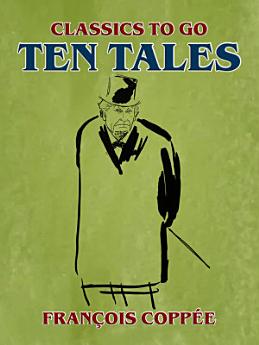
Über dieses E-Book
Excerpt from introduction: "Among these ten there are tales of all sorts, from the tragic adventure of "An Accident" to the pendent portraits of the "Two Clowns," cutting in its sarcasm, but not bitter—from "The Captain's Vices," which suggests at once George Eliot's Silas Marner and Mr. Austin Dobson's Tale of Polypheme, to the sombre revery of the poet "At Table," a sudden and searching light cast on the labor and misery which underlies the luxury of our complex modern existence. Like "At Table," "A Dramatic Funeral" is a picture more than it is a story; it is a marvellous reproduction of the factitious emotion of the good-natured stage folk, who are prone to overact even their own griefs and joys. "A Dramatic Funeral" seems to me always as though it might be a painting of M. Jean Beraud, that most Parisian of artists, just as certain stories of M. Guy de Maupassant inevitably suggest the bold freedom of M. Forain's sketches in black-and-white."
Excerpt from introduction: "Among these ten there are tales of all sorts, from the tragic adventure of "An Accident" to the pendent portraits of the "Two Clowns," cutting in its sarcasm, but not bitter—from "The Captain's Vices," which suggests at once George Eliot's Silas Marner and Mr. Austin D...
Mehr entdecken
Autoren-Profil
François Coppée (1842-1908) was a French poet, playwright, and novelist whose work captured the spirit of the late 19th century. Born in Paris, Coppée's early life was marked by hardship, which profoundly influenced his empathetic portrayal of the working class and the downtrodden. His literary career began with poetry, and he quickly became known for his accessible and sentimental verse, earning him the nickname "the poet of the humble."Coppée's work often reflected his conservative and nationalist views, which sometimes put him at odds with the more progressive elements of French society. Despite this, he was a member of the prestigious Académie Française and held a significant position in the literary establishment of his time. His plays, such as "Le Passant," were well-received and showcased his talent for capturing human emotion and social issues.One of Coppée's most notable contributions was his involvement in the Parnassian movement, which emphasized form and precision in poetry, reacting against the emotional excesses of Romanticism. This movement influenced many contemporary writers, including Paul Verlaine and Stéphane Mallarmé.Coppée's later years were marked by his controversial support for the nationalist and anti-Dreyfusard cause during the Dreyfus Affair, a stance that tarnished his reputation in the eyes of many. Nonetheless, his dedication to portraying the lives of ordinary people and his influence on the literary techniques of his time ensure his place in literary history.François Coppée remains a figure of intrigue, embodying the complexities of his era and offering modern readers a window into the cultural and social dynamics of 19th-century France.
François Coppée (1842-1908) was a French poet, playwright, and novelist whose work captured the spirit of the late 19th century. Born in Paris, Coppée's early life was marked by hardship, which profoundly influenced his empathetic portrayal of the working class and the downtrodden. His literary c...
Dieses E-Book bewerten
Deine Meinung ist gefragt!
Informationen zum Lesen
Smartphones und Tablets
Nachdem du die Google Play Bücher App für Android und iPad/iPhone installiert hast, wird diese automatisch mit deinem Konto synchronisiert, sodass du auch unterwegs online und offline lesen kannst.
Laptops und Computer
Im Webbrowser auf deinem Computer kannst du dir Hörbucher anhören, die du bei Google Play gekauft hast.
E-Reader und andere Geräte
Wenn du Bücher auf E-Ink-Geräten lesen möchtest, beispielsweise auf einem Kobo eReader, lade eine Datei herunter und übertrage sie auf dein Gerät. Eine ausführliche Anleitung zum Übertragen der Dateien auf unterstützte E-Reader findest du in der Hilfe.