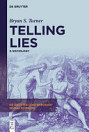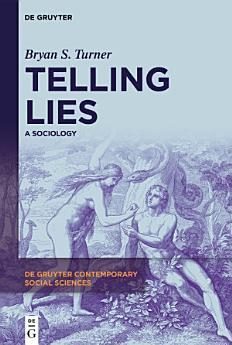
Telling Lies: A Sociology

· De Gruyter Contemporary Social Sciences Libro 47 · Walter de Gruyter GmbH & Co KG
Libro electrónico
160
Páginas
Herramientas

Acerca de este libro electrónico

From Plato’s Noble Lie to Machiavelli’s cynicism to modern day populism, lying in politics has been seen as a threat to social life. Opinions obviously vary from Augustin’s view that all forms of mendacity are evil to Kant’s universal principles. However, Hannah Arendt argued that telling the truth in politics has never been seen as a political virtue. From a sociological perspective, it could be argued that lying is always corrosive of trust and a threat to ‘social capital’. There is some general agreement though that lying (the ‘white lie’ for example) is acceptable if it has beneficial outcomes. This position is known in philosophy as ‘consequentialism’.

As a result, truth testing becomes the basic practical problem. This study of lying and truth testing starts with a consideration of the role of the oath and the confession in legal proceedings. The oath, especially sworn over a bible, was a traditional instrument of truth telling. Many legal experts, such as Jeremy Bentham, dismissed the oath as unreliable. With the secularization of society, the traditional oath has all but disappeared. The confession, if given with copious signs of remorse, was welcomed by judges as a sign of a reliable witness. Lie detectors have been introduced to test confessional claims to truth, but these are also unreliable. AI may be the next stage.

Despite Arendt’s depressing observation about politics and lies, lying is now seen to be a major problem in modern political life. There has been growing public concern about political issues that are closely associated with populism and the Presidency of Donald Trump. Similar problems had attended the Presidencies of both Richard Nixon and Bill Clinton. Faced with the challenge of public lies and fake news, many observers have concluded we are in the age of Post-Truth.

From Plato’s Noble Lie to Machiavelli’s cynicism to modern day populism, lying in politics has been seen as a threat to social life. Opinions obviously vary from Augustin’s view that all forms of mendacity are evil to Kant’s universal principles. However, Hannah Arendt argued that telling the tru...

Descubrir más

Acerca del autor

Bryan S. Turner is Professor of Sociology at the Australian Catholic University, Emeritus Professor of the Graduate Center CUNY, USA, and Distinguished Honorary Fellow in The Edward Cadbury Centre for the Public Understanding of Religion, University of Birmingham, UK.
Bryan S. Turner is Professor of Sociology at the Australian Catholic University, Emeritus Professor of the Graduate Center CUNY, USA, and Distinguished Honorary Fellow in The Edward Cadbury Centre for the Public Understanding of Religion, University of Birmingham, UK.

Califica este libro electrónico

Cuéntanos lo que piensas.

Información de lectura

Smartphones y tablets
Instala la app de Google Play Libros para Android y iPad/iPhone. Como se sincroniza de manera automática con tu cuenta, te permite leer en línea o sin conexión en cualquier lugar.
Laptops y computadoras
Para escuchar audiolibros adquiridos en Google Play, usa el navegador web de tu computadora.
Lectores electrónicos y otros dispositivos
Para leer en dispositivos de tinta electrónica, como los lectores de libros electrónicos Kobo, deberás descargar un archivo y transferirlo a tu dispositivo. Sigue las instrucciones detalladas que aparecen en el Centro de ayuda para transferir los archivos a lectores de libros electrónicos compatibles.