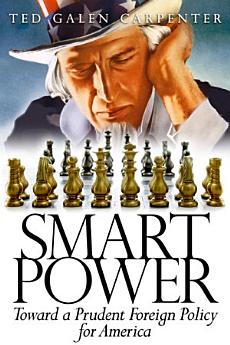
Smart Power: Toward a Prudent Foreign Policy for America
About this ebook
American policymakers grapple with the prospect of new and volatile nuclear powers, most notably North Korea and Iran. It remains to be seen whether Washington’s strategy of using multilateral negotiations involving North Korea’s neighbors to induce Pyongyang to end its quest for nuclear weapons will succeed. The more hardline strategy of imposing economic sanctions and considering the use of military force is clearly not working with regard to Iran’s nuclear ambitions. Other problems, such as the Taiwan issue, are just clouds on the horizon at present, but they have the potential to cause serious trouble in the coming years. The Taiwan problem highlights the danger inherent in Washington’s habit of making ill-advised security commitments to small, vulnerable client states that are not crucial to America’s own security and well being. In the case of Taiwan, such an obligation could lead to armed confrontation between the United States and China.
Ted Galen Carpenter examines these and other foreign policy challenges that America confronts in the 21st century and diagnoses what is wrong with Washington’s current approach. Throughout these essays, he outlines an alternative strategy that would protect America’s security while avoiding unnecessary and unrewarding military adventures.
Discover more
About the author
Ted Galen Carpenter is senior fellow for defense and foreign policy studies at the Cato Institute. He is the author of 8 books and the editor of 10 books on international affairs, including Smart Power: Toward a Prudent Foreign Policy for America. Carpent