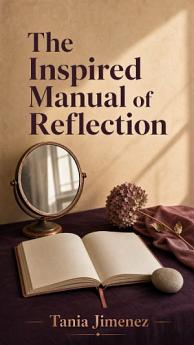
The Inspired Manual of Reflection
About this ebook
The journey of reflection is, at its heart, an invitation to pause. In a society that celebrates relentless motion and noise, true reflection requires courage—the courage to be still, to observe, and to listen deeply to both the self and the environment. This manual is not simply a collection of words but a living guide, designed to foster a new relationship between language, thought, and action. Each chapter is carefully crafted, blending linguistic enrichment with actionable insights that empower the reader to make conscious, eco-friendly choices in daily life.
At the intersection of Self-Help, Green Lifestyle, and Sustainable Living, this book offers a vocabulary-based approach to personal growth. It recognizes that language is more than communication—it is a tool for understanding the world and reshaping it. For learners of English and Malay, the acquisition of vocabulary is not just an academic pursuit; it is a gateway to new ways of seeing, feeling, and acting within the world. This manual, therefore, interlaces essential English terms, their Malay counterparts, pronunciation guidance, and rich contextual usage, all within the framework of reflection and environmental stewardship.
Reflection is more than introspection—it is a dialogue with the world, a deliberate act of engaging with our surroundings and our inner landscapes.
To truly adopt a green lifestyle is to cultivate a sense of interconnectedness with the earth. It is about recognizing that our choices—how we speak, act, and consume—ripple outward, shaping both the immediate environment and the broader global tapestry. The vocabulary explored in this book is carefully curated to empower readers in discussing, practicing, and advocating for sustainable living. Words such as renewable, biodegradable, conservation, and harmony are more than entries in a dictionary; they become guiding principles that shape our worldviews and daily habits.
Nature—the ultimate teacher—serves as the backdrop for this manual. The language of nature is universal, transcending borders and cultures. By drawing upon the wisdom of the natural world, this book positions reflection as an act of alignment with ecological rhythms. It provides the linguistic tools to describe, appreciate, and protect the environment, fostering not only language proficiency but also a sense of custodianship and gratitude for the earth’s abundance.
Language learning, especially in the context of sustainability and self-growth, is fundamentally an act of empowerment. For English and Malay learners, each new word mastered is a seed planted—one that can grow into meaningful action, thoughtful dialogue, and informed advocacy. This book demystifies complex terms, offers pronunciation guidance, and contextualizes vocabulary within real-world scenarios related to green living and personal development. By doing so, it bridges the gap between theory and practice, equipping readers to participate confidently in conversations about sustainable homes, eco-friendly habits, and mindful living.
A core principle of this manual is practicality. Reflection is a living process, and so too is language. Throughout the chapters, readers will encounter not only definitions and translations but also practical examples, common mistakes, and strategies for integrating new words into daily life. Whether it is discussing composting with neighbors, making sustainable choices at the market, or simply savoring the tranquility of a forest walk, the vocabulary and reflective practices presented here aim to enrich both communication and experience.
The journey laid out in The Inspired Manual of Reflection is structured, yet flexible. It recognizes that each reader comes with unique experiences, aspirations, and levels of language proficiency. The book is designed to be accessible, whether you are a beginner seeking foundational vocabulary or an advanced learner desiring nuanced linguistic insight. Its chapters are organized to build sequentially, deepening both reflective capacity and language mastery with each step.
A distinctive feature of this manual is the integration of English and Malay vocabulary. This bilingual approach honors the rich linguistic landscape of Southeast Asia and beyond, fostering cross-cultural understanding and appreciation. Each term is thoughtfully paired with its counterpart, accompanied by pronunciation guides and usage examples that reflect authentic, everyday contexts. In doing so, the book not only supports language acquisition but also celebrates the diversity and beauty of linguistic coexistence.
As you engage with this book, you will be invited to:
Expand your vocabulary in both English and Malay, with a focus on sustainability, self-growth, and nature.
Deepen your practice of reflection, using language as a tool for mindfulness and personal transformation.
Develop practical communication skills for discussing and implementing green lifestyle choices in the home and community.
Cultivate a sense of ecological responsibility, using words and actions to honor and protect the natural world.
Embrace a holistic approach to language learning, one that integrates intellectual growth with emotional and ethical development.
Within these pages, you will find not only lists of words but also stories, examples, and exercises that animate each term and concept. Reflection, as presented here, is an active process—one that involves questioning, noticing, and making intentional choices. The language you learn will become a companion on this journey, supporting you in articulating your values, sharing your insights, and inspiring others to walk alongside you on the path of sustainable living.
To support meaningful learning, each chapter is structured to provide:
Key Vocabulary: Essential terms in English and Malay, relevant to the chapter’s theme.
Pronunciation Guides: Simple phonetic cues for both languages to ensure confident usage.
Definitions and Explanations: Clear, accessible explanations of terms, avoiding jargon and prioritizing understanding.
Contextual Examples: Sentences and scenarios that bring vocabulary to life within the context of self-help, sustainable living, and nature.
Linguistic Insights: Notes on cultural nuances, common mistakes, and differences between English and Malay usage.
Practical Applications: Strategies and exercises for integrating vocabulary and reflective practices into daily routines.
This manual is for anyone who seeks to live more consciously, to speak more thoughtfully, and to act in ways that honor both self and planet. Whether you are an individual striving for personal growth, a family committed to greening your household, or a community leader advocating for change, The Inspired Manual of Reflection offers a roadmap and a resource.
In embarking on this journey, remember that transformation begins with the smallest of steps—a new word learned, a moment of stillness observed, a habit reconsidered. Over time, these small acts of reflection and language acquisition accumulate, creating a life that is richer, more sustainable, and deeply aligned with both inner purpose and outer harmony.
May this manual serve as your guide, your companion, and your inspiration—illuminating the path toward a reflective, sustainable, and linguistically enriched life.
Discover more
Ratings and reviews

- Flag inappropriate
About the author
Tania Jimenez writes suspenseful gothic thrillers and dark psychological fiction where old family secrets, hidden motives, and haunting atmospheres collide. Obsessed with the eerie, quiet spaces where memory and paranoia blur, her prose builds slow-burning tension that keeps readers turning pages late into the night. Drawing inspiration from her background in forensic psychology, Tania crafts intricate character profiles driven by obsession, guilt, and survival. When she steps away from her desk, she enjoys collecting vintage taxidermy, exploring abandoned architecture, and visiting coastal lighthouses in foggy weather. She resides in Portland, Oregon.