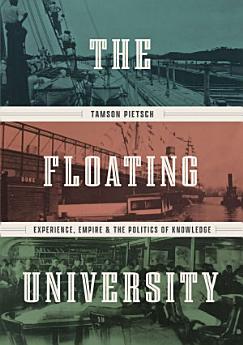
The Floating University: Experience, Empire, and the Politics of Knowledge
May 2023 · University of Chicago Press
Ebook
320
Pages
Tools
info
family_home
Eligible
info
About this ebook
The Floating University sheds light on a story of optimism and imperialist ambition in the 1920s.
In 1926, New York University professor James E. Lough—an educational reformer with big dreams—embarked on a bold experiment he called the Floating University. Lough believed that taking five hundred American college students around the globe by ship would not only make them better citizens of the world but would demonstrate a model for responsible and productive education amid the unprecedented dangers, new technologies, and social upheavals of the post–World War I world. But the Floating University’s maiden voyage was also its last: when the ship and its passengers returned home, the project was branded a failure—the antics of students in hotel bars and port city back alleys that received worldwide press coverage were judged incompatible with educational attainment, and Lough was fired and even put under investigation by the State Department.
In her new book, Tamson Pietsch excavates a rich and meaningful picture of Lough’s grand ambition, its origins, and how it reveals an early-twentieth-century America increasingly defined both by its imperialism and the professionalization of its higher education system. As Pietsch argues, this voyage—powered by an internationalist worldview—traced the expanding tentacles of US power, even as it tried to model a new kind of experiential education. She shows that this apparent educational failure actually exposes a much larger contest over what kind of knowledge should underpin university authority, one in which direct personal experience came into conflict with academic expertise. After a journey that included stops at nearly fifty international ports and visits with figures ranging from Mussolini to Gandhi, what the students aboard the Floating University brought home was not so much knowledge of the greater world as a demonstration of their nation’s rapidly growing imperial power.
The Floating University sheds light on a story of optimism and imperialist ambition in the 1920s.
In 1926, New York University professor James E. Lough—an educational reformer with big dreams—embarked on a bold experiment he called the Floating University. Lough believed that taking five hundred...
Discover more
About the author
Tamson Pietsch is associate professor of social and political sciences, and director of the Australian Centre for Public History, at the University of Technology Sydney.
Tamson Pietsch is associate professor of social and political sciences, and director of the Australian Centre for Public History, at the University of Technology Sydney.
Rate this ebook
Tell us what you think.
Reading information
Smartphones and tablets
Install the Google Play Books app for Android and iPad/iPhone. It syncs automatically with your account and allows you to read online or offline wherever you are.
Laptops and computers
You can listen to audiobooks purchased on Google Play using your computer's web browser.
eReaders and other devices
To read on e-ink devices like Kobo eReaders, you'll need to download a file and transfer it to your device. Follow the detailed Help Center instructions to transfer the files to supported eReaders.