The American Way: Stories of Invasion
About this ebook
This new anthology re-examines this history with stories that explore the human cost of these interventions on foreign soil, by writers from that soil. From nuclear testing in the Pacific, to human testing of CIA torture tactics, from coups in Latin America, to all-out invasions in the Middle and Far East; the atrocities that follow are often dismissed in history books as inevitable in the ‘fog of war’.
By presenting them from indigenous, grassroots perspectives, accompanied by afterwords by the historians that consulted on them, this book attempts to bring some clarity back to that history.
Stories are accompanied by afterwords written by historians, providing historical context.
Afterwords by: Olmo Golz, Emmanuel Gerard, Felix Julio Alfonso Lopez, David Harper, Ertugrul Kurkcu, Francisco Dominguez, Maurizio Dianese, Julio Barrios Zardetto, Brian Meeks, Victor Figueroa Clark, Raymond Bonner, Daniel Kovalik, Meral Cicek, Ian Shaw, Matteo Capasso, Neil Faulkner, Xuan Phuong, Iyad S. S. Abujaber & Chris Hedges.
Translated by: Orsola Casagrande, Mustafa Gundogdu, Sawad Hussain, Jonathan Wright, Basma Ghalayini, Nicholas Glastonbury, Sara Khalili, J. Bret Maney, Adam Feinstein, and Megan McDowell.
Part of our History-into-Fiction series.
Discover more
Ratings and reviews
About the author
Orsola Casagrande is a Havana-based journalist and film-maker. As a journalist, she worked for 25 years for the Italian daily newspaper il manifesto, and is currently co-editor of the web magazine Global Rights. She writes in Italian, English, Spanish and Turkish, and speaks Kurdish and French, as well as having basic conversational skills in Farsi and the Basque language. Based between Barcelona and Havana, Orsola writes regularly on Spanish, Catalan and Basque politics, as well as the Colombia peace process. She has collaborated with international peace mediator Brian Currin on peace negotations in the Basque country, Kurdistan, and Colombia. She has translated numerous books, as well as written her own.
Talal Abu Shawish is Assistant Director of the Boys Preparatory School for Refugees in Gaza. He has published three short story collections – The Rest are Not For Sale, The Assassination of a Painting (2010) and Goodbye, Dear Prophets (2011) – as well as four novels: We Deserve a Better Death (2012), Middle Eastern Nightmares (2013), Seasons of Love and Blood (2014), and Urban House (2018). His work has won three awards (the Ministry of Youth and Sports’ Short Story Competition in 1996 and 1997, and the Italian Sea That Connects Award, 1998). Shawish was President of the Association of New Prospects for Community Development, 2007-2011, and is a member of the Palestinian Writers Union.
Najwa Bin Shatwan is a Libyan academic and novelist, the first Libyan to ever be shortlisted for the International Prize of Arabic Fiction (in 2017). She has written three novels: Waber Al Ahssina (The Horses’ Hair), Madmum Burtuqali (Orange Content), and Zareeb Al-Abeed (The Slave Yards), in addition to several collections of short stories and plays. She was chosen as one of the thirty-nine best Arab authors under the age of forty by Hay Festival’s Beirut 39 project (2009). In 2018, she was chosen from hundreds of Arab writers for the 2018 Banipal Writing Fellowship Residency at the University of Durham and in 2020, she was chosen to co-lead a series of creative writing workshops in Sharjah (World Book Capital 2019) for Arab writers.
Hassan Blasim is an Iraqi writer currently based in Finland. Born in Baghdad in 1973, he studied at the city's Academy of Cinematic Arts, where two of his films ‘Gardenia’ (screenplay & director) and ‘White Clay’ (screenplay) won the Academy's Festival Award for Best Work in their respective years. In 1998, after several arrests, he was advised by his tutors to leave Baghdad - the overtly political and critical nature of his films was drawing attention from Saddam's informants at the Academy. He fled - initially to Sulaymaniya (Iraqi Kurdistan), where he made feature-length drama Wounded Camera, under the Kurdish pseudonym 'Ouazad Osman' - and ultimately in 2004, after years of travelling illegally through Europe as a refugee, he settled in Finland.
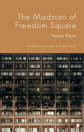
Hassan's stories first appeared on the website iraqstory.com, which he co-edited, and then first in print, with the anthology Madinah(commissioned by Comma Press in 2008). His debut collection The Madman of Freedom Square was published by Comma a year later, 2009 (translated by Jonathan Wright) and was longlisted for the Independent Foreign Fiction Prize in 2010. His second collection, The Iraqi Christ (again translated by Jonathan Wright) was published by Comma in April 2013, and won the 2014 Independent Foreign Fiction Prize - the first Arabic title and the first short story collection ever to win the award.
Hassan's work has been translated (or is in the process of being translated) into over 20 languages. A heavily censored Arabic edition of Madman was finally published in 2012 and was immediately banned in Jordan, and an Arabic edition of The Iraqi Christ was published in 2015. A selection of stories from both of his two collections were published in the US in 2014, by Penguin USA, under the title 'The Corpse Exhibition', which was later picked as one of Publishers Weekly's Top Ten Books of 2014.
Paige Cooper is a freelance copywriter and the author of the short story collection Zolitude, which was nominated for several prizes, including the Giller and the Governor General’s Award. She grew up in the Canadian Rockies, went to the University of British Columbia, and got a Masters in Library and Information Studies at Dalhousie. Her stories have appeared in magazines like West Branch, Canadian Notes & Queries, Michigan Quarterly Review, and The Fiddlehead, among others. She is the editor of Best Canadian Stories 2020.
Lina Meruane is an award-winning Chilean writer and scholar. She has published two collections of short stories and five novels. Translated by Megan McDowell into English are her latest: Seeing Red (Atlantic) and Nervous System (Atlantic). Meruane has written several non-fiction books, among which is her essay on the impact and representation of the AIDS epidemic in Latin American literature, Viral Voyages (Palgrave MacMillan). She has received, among others, the prestigious Sor Juana Inés de la Cruz Novel Prize (Mexico, 2012), the Anna Seghers Prize (Germany, 2011) grants from the Guggenheim Foundation, the National Endowment for the Arts, and a DAAD Writer in Residence in Berlin. She currently teaches Global Cultures and Creative Writing at New York University.
Fariba Nawa is an Afghan-American freelance journalist based in Istanbul. She was born and raised in Afghanistan until she was 9, then fled the Soviet invasion with her family to the U.S. in the 1980s. She authored Afghanistan Inc. (CorpWatch), an oft-cited resource in international debates on the effectiveness of reconstruction efforts in Afghanistan. She is also author of Opium Nation (Harper Perennial, 2011), a personal account of the drug trade in Afghanistan and its impact on women. She is the host and chief editor of On Spec podcast. This is her first piece of published fiction.
Jacob Ross is a novelist, short story writer, editor and creative writing tutor. His crime fiction novel, The Bone Readers, won the inaugural Jhalak Prize in 2017. His literary novel, Pynter Bender, was published to critical literary acclaim and was shortlisted for the 2009 Commonwealth Writers Regional Prize. His latest book is Tell No-One About This, a collection of stories written over a span of forty years. He is Associate Fiction Editor at Peepal Tree Press, and the editor of Closure, Contemporary Black British Short Stories.
Bina Shah is a Karachi-based author of five novels and two collections of short stories. Her latest novel, Before She Sleeps, was published by Delphinium Books in August 2018. A regular contributor to The New York Times, Al Jazeera, The Huffington Post, and a frequent guest on the BBC, she has contributed essays and op-eds to Granta, The Independent, and The Guardian, and writes a regular op-ed column for Dawn, Pakistan’s biggest English-language newspaper. She works on issues of women’s rights and female empowerment in Pakistan and across Muslim countries. In 2020, she was awarded the rank of Chevalier in the Ordre des arts et des lettres by the French Ministry of Culture.
Kim Thúy was born in Vietnam in 1968. At the age of ten she left Vietnam along with a wave of refugees commonly referred to in the media as ‘the boat people’ and settled with her family in Quebec, Canada. A graduate in translation and law, she has worked as a seamstress, interpreter, lawyer and chef-restaurant owner. She lives in Montreal and devotes her life to writing. Kim Thúy has received many awards, including the Governor General’s Literary Award in 2010, and was one of the top four finalists of the Alternative Nobel Prize in 2018. Her books have sold more than 850,000 copies around the world and have been translated into 29 languages and distributed across 40 countries and territories.
Carol Zardetto is a Guatemalan writer, lawyer and diplomat. She writes novels, short stories and essays, as well as plays and scripts for documentaries, including La Flor del Café, which was nominated for a best documentary award at the Ícaro International Film Festival in 2010. Her first novel, Con Pasión Absoluta, won the 2004 Mario Monteforte Toledo Central American Novel Award. Her other works include Cuando los Rolling Stones llegaron a la Habana and La ciudad de los minotauros. Since 2007, she has also worked as a political columnist for El Periódico, a Guatemalan newspaper.
Gianfranco Bettin is an Italian sociologist, writer and long-time leader of the Greens in Veneto. During his long political career, he was a member of the Italian Parliament (1992–1994), deputy mayor of Venice for Mestre (1995–2005) and member of the Regional Council of Veneto (2000–2010), and is known for his support of Gianfranco Fini’s proposal to give migrants the right to vote in general elections, and full citizenship rights to migrants in his region. He is the author of eighteen books, including Cracking (Mondadori, 2019) and Qualcosa che brucia (Something Burning, Garzanti, 1989), a novel exploring working-class Venice.
Gioconda Belli is a Nicaraguan poet, writer and political activist. She was involved in the Nicaraguan Revolution from a very young age and occupied important positions in the Sandinista Party and in the revolutionary government. Her poetry and prose has been awarded numerous prizes, including the Biblioteca Breve award for Infinity in the Palm of her Hand and the Casa de las Americas Prize in 1978 for her poetry book Line of Fire. Her memoir, The Country Under my Skin, was a finalist for the Los Angeles Times Book Prize in 2001 and she was awarded the 2018 Hermann Kesten Prize by PEN Germany for being a powerful voice for freedom of speech. She is President of PEN International, Nicaragua, a member of the Spanish Royal Academy of Letters and Chevalier des les Arts et Lettres of France.
Gabriel Ángel is the literary and political pseudonym of Germán Gómez Camacho. Born in Bogotá in 1958, Ángel was an active member of the FARC guerrilla movement for 30 years, until the signing of Colombia’s peace accord in 2016. He has since returned to his former profession as a lawyer, and is part of the national leadership of FARC’s new political party, Communes. Ángel regularly contributes opinion pieces to the Colombian press and is also the author of three literary works, La luna del forense, A Quemarropa and Algún día será.
Ahmel Echevarría Peré was born in Havana, Cuba, in 1974. One of Cuba’s most acclaimed younger writers, he was a student at the Jorge Onelio Cardoso Centre for Literary Formation, where he now works as the editor of its website. He is also editor of the website Vercuba, and writes a column in the literary magazine Cuba Contemporánea. His books include: Inventario (Unión, 2007, Cuba); the short novel Esquirlas (Letras Cubanas, 2006, Cuba); Búfalos camino al matadero (Oriente, 2013, Cuba); and La noria (Unión, 2013, Cuba). He was awarded the David Unión prize in 2004 for his book Inventarioand the 2011 Franz Kafka Novelas de Gaveta Prize in the Czech Republic for his book Dias de entrenamiento, which was also awarded the Italo Calvino Prize in 2012. His book La Noria was awarded the Critic Prize 2013.
Ahmet Haluk Ünal is a screenwriter and director. After studying economics at Hacettepe University, he worked as an author and project designer from 2000 to 2004, and then as a manager and scriptwriter at various workshops and universities. In addition to two feature films, he was part of the directing collective that made the documentary film Little Black Fish in 2014 about childhood in Turkish Kurdistan in the 90s. With the film Jiyan’s Story, he participated in the War on Peace history festival at the Maxim Gorki Theatre in 2018.
Hüseyin Karabey is a Kurdish-Turkish film director, screenwriter and producer. He attended the Fine Art Faculty of Marmara University, and was also a member of the Mesopotamian Cinema Collective at the Mesopotamia Cultural Center (MKM) in Istanbul. His first feature film, Gitmek: My Marlon and Brando, was selected for the 37th Rotterdam International Film Festival and the New York Tribeca International Film (Best Director Award). His other works include the award-winning Come to My Voice (2014) and Insiders (2018).
Wilfredo Mármol Amaya was born in El Savador in 1959. He works at the Supreme Court of Justice of El Salvador, and was previously an advisor to the Secretary of Culture in San Salvador (2015-2018), whilst Nayib Bukele was city mayor. He is a writer and poet, and his works include Equinoccio de un Crisol (2011) and Cuentos y Relatos Viroleños (2019).
Lidudumalingani (full name Lidudumalingani Mqombothi) was born in the village of Zikhovane in the Eastern Cape, and is a South African writer, filmmaker and photographer. His short story ‘Memories We Lost’ won the 2016 Caine Prize. In 2016 he was also the recipient of a Miles Morland Scholarship.
Fiston Mwanza Mujila was born in Lubumbashi, Democratic Republic of the Congo, in 1981, and writes poetry, prose, and theatre. Mujila lives in Graz, where he teaches African literature at Universität Graz and works with musicians in Austria on various projects. His first novel, Tram 83, was longlisted for the Man Booker International Prize and the Prix du Monde, and was awarded the Etisalat Prize for Literature and the Internationaler Literaturpreis from Der Haus der Kulturen der Welt.
Born in 1969, Payam Nasser is an author and screenplay writer. His debut collection of short stories, Consternation (2012), was a finalist for the Golshiri prize, as well as the Haft-Eghlim Literary Award for the best short story collection of the year. It also featured the story, ‘Wake it Up’, which received the 2014 Houshang Golshiri Literary Award. He is the author of one novel, The Trifles Thief, as well as numerous screenplays, including the film One Long Day, which was awarded the Special Jury Prize at the International Orthodox Film Festival in Russia in 2015.