About this ebook
Social anthropology explores the role of meanings. ambiguities and contradictions of social life, patterns of sociality, violence and conflict, and the underlying logics of social behaviour. It is distinguished from sociology, both in its main methods based on long term participant observation and linguistic competence, and in its commitment to the relevance and illumination provided by micro studies. Social anthropology is the study of all peoples everywhere – what they make, what they do, what they think and how they organise their social relationships and societies. There are many variants of social anthropology. The Indian variant is a combination of British social anthropology and Indian sociology. Of late the combination has also affected the methodology. It is argued that the students of social anthropology cannot be served by yesterday’s social anthropology which is only a state recipe. There is a felt need to provide students and researchers with a suitably simple yet comprehensive introduction to the subject of Social Anthropology. The present publication seeks to fulfill this need and it is hoped that not only will the book provide the basic guidelines for the aspiring students of anthropology but also equip the research student with a roadmap to the complexities of the subject for his further studies and specialization. The aim of this book is to present a core of this subject knowledge that is desirable for students. Every attempt has been made to keep abreast of the advances in the subject and at the same time to include the fundamentals.
Social anthropology explores the role of meanings. ambiguities and contradictions of social life, patterns of sociality, violence and conflict, and the underlying logics of social behaviour. It is distinguished from sociology, both in its main methods based on long term participant observation an...
About the author
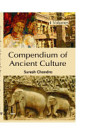
Dr. Suresh Chandra, a highly qualified person obtained his all higher qualifications M.A. Ph.D. from Allahabad University in Political Science. He is a widely acclaimed author and editor. He has attended a number of seminars and conferences. He has edited several books and has specialization in World's Political Affairs.
Dr. Suresh Chandra, a highly qualified person obtained his all higher qualifications M.A. Ph.D. from Allahabad University in Political Science. He is a widely acclaimed author and editor. He has attended a number of seminars and conferences. He has edited several books and has specialization in W...
Rate this ebook
Tell us what you think.
Reading information
Smartphones and tablets
Install the Google Play Books app for Android and iPad/iPhone. It syncs automatically with your account and allows you to read online or offline wherever you are.
Laptops and computers
You can listen to audiobooks purchased on Google Play using your computer's web browser.
eReaders and other devices
To read on e-ink devices like Kobo eReaders, you'll need to download a file and transfer it to your device. Follow the detailed Help Center instructions to transfer the files to supported eReaders.