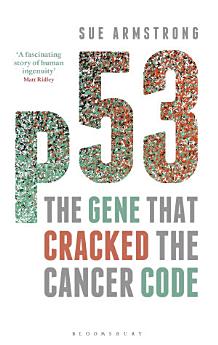
p53: The Gene that Cracked the Cancer Code
Nov 2014 · Bloomsbury Publishing
Ebook
288
Pages
About this ebook
All of us have lurking in our DNA a most remarkable gene, which has a crucial job – it protects us from cancer. Known simply as p53, this gene constantly scans our cells to ensure that they grow and divide without mishap, as part of the routine maintenance of our bodies. If a cell makes a mistake in copying its DNA during the process of division, p53 stops it in its tracks, summoning a repair team before allowing the cell to carry on dividing. If the mistake is irreparable and the rogue cell threatens to grow out of control, p53 commands the cell to commit suicide. Cancer cannot develop unless p53 itself is damaged or prevented from functioning normally.
Perhaps unsurprisingly, p53 is the most studied single gene in history.
This book tells the story of medical science's mission to unravel the mysteries of this crucial gene, and to get to the heart of what happens in our cells when they turn cancerous. Through the personal accounts of key researchers, p53: The Gene that Cracked the Cancer Code reveals the fascination of the quest for scientific understanding, as well as the huge excitement of the chase for new cures – the hype, the enthusiasm, the lost opportunities, the blind alleys, and the thrilling breakthroughs. And as the long-anticipated revolution in cancer treatment tailored to each individual patient's symptoms begins to take off at last, p53 remains at the cutting edge.
This timely tale of scientific discovery highlights the tremendous recent advances made in our understanding of cancer, a disease that affects more than one in three of us at some point in our lives.
Perhaps unsurprisingly, p53 is the most studied single gene in history.
This book tells the story of medical science's mission to unravel the mysteries of this crucial gene, and to get to the heart of what happens in our cells when they turn cancerous. Through the personal accounts of key researchers, p53: The Gene that Cracked the Cancer Code reveals the fascination of the quest for scientific understanding, as well as the huge excitement of the chase for new cures – the hype, the enthusiasm, the lost opportunities, the blind alleys, and the thrilling breakthroughs. And as the long-anticipated revolution in cancer treatment tailored to each individual patient's symptoms begins to take off at last, p53 remains at the cutting edge.
This timely tale of scientific discovery highlights the tremendous recent advances made in our understanding of cancer, a disease that affects more than one in three of us at some point in our lives.
All of us have lurking in our DNA a most remarkable gene, which has a crucial job – it protects us from cancer. Known simply as p53, this gene constantly scans our cells to ensure that they grow and divide without mishap, as part of the routine maintenance of our bodies. If a cell makes a mistake...
Discover more
About the author
Sue Armstrong is a writer and broadcaster specialising in science, health and development issues. As a foreign correspondent based in Brussels and then South Africa, Sue has written for a wide variety of publications and audiences, including New Scientist magazine, the World Health Organisation and UNAIDS, and for many years she reported on the AIDS pandemic from the frontline in Africa, Asia and the Caribbean. Now based in Scotland, Sue has worked on many feature programmes, on science and other topics, for BBC Radio 4 and the BBC World Service.
Sue Armstrong is a writer and broadcaster specialising in science, health and development issues. As a foreign correspondent based in Brussels and then South Africa, Sue has written for a wide variety of publications and audiences, including New Scientist magazine, the World Health Organisation a...
Rate this ebook
Tell us what you think.
Reading information
Smartphones and tablets
Install the Google Play Books app for Android and iPad/iPhone. It syncs automatically with your account and allows you to read online or offline wherever you are.
Laptops and computers
You can listen to audiobooks purchased on Google Play using your computer's web browser.
eReaders and other devices
To read on e-ink devices like Kobo eReaders, you'll need to download a file and transfer it to your device. Follow the detailed Help Center instructions to transfer the files to supported eReaders.