When Everyone Knows That Everyone Knows . . .: Common Knowledge and the Mysteries of Money, Power, and Everyday Life
Sep 2025 · Sold by Simon and Schuster
star
8 reviews
Ebook
384
Pages
family_home
Eligible
info
About this ebook
From one of the world’s most celebrated intellectuals, a “fascinating” (Financial Times), brilliantly insightful work that explains how we think about each other’s thoughts about each other’s thoughts, ad infinitum.
It sounds impossible, but Steven Pinker shows that we do it all the time. This awareness is called common knowledge, and it has a momentous impact on our social, political, and economic lives.
Common knowledge is necessary for coordination, for making arbitrary but complementary choices like driving on the right and coalescing behind a political leader or movement. It’s also necessary for social coordination: everything from meeting up at a time and place to forming enduring bonds of friendship, romance, or authority. Humans have a sixth sense for common knowledge, and we create it with signals like laughter, tears, blushing, eye contact, and blunt speech.
But people also may strive to avoid common knowledge—to ensure that even if everyone knows something, they can’t know that everyone else knows they know it. And so we get rituals like benign hypocrisy, veiled bribes and threats, sexual innuendo, and pretending not to see the elephant in the room.
Pinker shows how the hidden logic of common knowledge can make sense of many of life’s enigmas: financial bubbles and crashes, revolutions that seem to come from out of nowhere, the eruption of cancel culture, and even the awkwardness of a first date.
It sounds impossible, but Steven Pinker shows that we do it all the time. This awareness is called common knowledge, and it has a momentous impact on our social, political, and economic lives.
Common knowledge is necessary for coordination, for making arbitrary but complementary choices like driving on the right and coalescing behind a political leader or movement. It’s also necessary for social coordination: everything from meeting up at a time and place to forming enduring bonds of friendship, romance, or authority. Humans have a sixth sense for common knowledge, and we create it with signals like laughter, tears, blushing, eye contact, and blunt speech.
But people also may strive to avoid common knowledge—to ensure that even if everyone knows something, they can’t know that everyone else knows they know it. And so we get rituals like benign hypocrisy, veiled bribes and threats, sexual innuendo, and pretending not to see the elephant in the room.
Pinker shows how the hidden logic of common knowledge can make sense of many of life’s enigmas: financial bubbles and crashes, revolutions that seem to come from out of nowhere, the eruption of cancel culture, and even the awkwardness of a first date.
From one of the world’s most celebrated intellectuals, a “fascinating” (Financial Times), brilliantly insightful work that explains how we think about each other’s thoughts about each other’s thoughts, ad infinitum.
It sounds impossible, but Steven Pinker shows that we do it all the time. This a...
Discover more
Ratings and reviews
8 reviews

Andrea Romance
- Flag inappropriate
September 24, 2025
With examples from art, humor, and everyday life, this book explores the crucial role of “common knowledge” in shaping human interaction. This often-unacknowledged force drives both cooperation and conflict, from economic bubbles to social media outrage. To me, this book feels like it would work better as an article. It uses a lot of examples to illustrate simple concepts that could be expressed much more concisely. Thanks, NetGalley, for the ARC. This is my honest and voluntary review.

B. Mars
- Flag inappropriate
June 22, 2026
Pinker at the very beginning quotes Yuval Harari's Fiction Theory, dismissing its fiction part and replacing it with convention. His blunders start from there. Money, corporations, are neither fiction nor convention, but real backed by stable governments. Pinker fails to explain why common knowledge beyond a second degree is just Wittgenstein's language gone on holiday, neither in real life nor in mathematics can there be infinitely recursive common knowledge, only intentionality of second order

Cameron
- Flag inappropriate
February 24, 2026
This entire book is explained in the first 10 pages. the rest of it is just example after example giving the same idea.
About the author
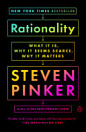
Steven Pinker is the Johnstone Professor of Psychology at Harvard University. He has won many prizes for his teaching, his research on language, cognition, and social relations, and his twelve books, including The Language Instinct, How the Mind Works, The Better Angels of Our Nature, and Rationality. He is an elected member of the National Academy of Sciences, a two-time Pulitzer Prize finalist, and one of Time’s “100 Most Influential People in the World Today.”
Steven Pinker is the Johnstone Professor of Psychology at Harvard University. He has won many prizes for his teaching, his research on language, cognition, and social relations, and his twelve books, including The Language Instinct, How the Mind Works, The Better Angels of Our Nature, and Rationa...
Rate this ebook
Tell us what you think.
Reading information
Smartphones and tablets
Install the Google Play Books app for Android and iPad/iPhone. It syncs automatically with your account and allows you to read online or offline wherever you are.
Laptops and computers
You can listen to audiobooks purchased on Google Play using your computer's web browser.
eReaders and other devices
To read on e-ink devices like Kobo eReaders, you'll need to download a file and transfer it to your device. Follow the detailed Help Center instructions to transfer the files to supported eReaders.