Your Creative Brain and AI: How We Learn and Consciously Experience Art, Music, and Meaning
Jan 2026 · Oxford University Press
Ebook
304
Pages
Tools
info
family_home
Eligible
info
About this ebook
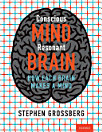
How do our brains give rise to our conscious minds? How do our minds learn and consciously experience miraculous creations of our civilizations, such as visual art, music, and the languages whose meanings enable us to think and communicate about our experiences in the world? How does human learning and language differ from some Artificial Intelligence algorithms that fail to explain how human minds work? Unlike these AI algorithms, whose flaws are explained in the book, human brains provide a blueprint for the paradigm of autonomous adaptive intelligence that promises to revolutionize all aspects of society during this century and beyond. This book provides an introductory and self-contained description of exciting answers to these questions that modern theories of mind and brain have proposed. For over 50 years, Stephen Grossberg has been internationally acknowledged to be the most important pioneer and current research leader whose work explains how our brains make our minds. He is often called the Father of AI because he introduced the modern neural networks paradigm in 1957 as a Dartmouth college Freshman, as well as the main equations that help to explain how our brains make our minds. He has also been called the Newton and Einstein of the Mind because he and many gifted collaborators have subsequently developed neural network models of essentially all the main processes whereby our brains make our conscious and unconscious minds in both healthy individuals and clinical patients. Grossberg published his award-winning Magnum Opus, Conscious Mind, Resonant Brain: How Each Brain Makes a Mind, in 2021 to provide a self-contained and non-technical overview and synthesis of these discoveries. The current book describes his recent discoveries about art, music, and meaning in accessible language intended to appeal to all readers who love art and music, and who wonder about the mystery of how languages acquire meaning.
How do our brains give rise to our conscious minds? How do our minds learn and consciously experience miraculous creations of our civilizations, such as visual art, music, and the languages whose meanings enable us to think and communicate about our experiences in the world? How does human learni...
Discover more
About the author
Stephen Grossberg is Wang Professor of Cognitive and Neural Systems, and Emeritus Professor of Mathematics & Statistics, Psychological & Brain Sciences, and Biomedical Engineering at Boston University. He is internationally acknowledged as the most important pioneer and current research leader who discovers and develops neural network models of how brains make minds. In 1957, he introduced the basic equations that are used world-wide in these models, which explain how individuals adapt in real-time to changing environments, including models of vision and visual cognition; consciousness; object and scene recognition; audition, speech and language; development; cognitive information processing; reinforcement learning and cognitive-emotional interactions; navigation; social cognition; sensory-motor control and planning; mental disorders; and neuromorphic technology.
Stephen Grossberg is Wang Professor of Cognitive and Neural Systems, and Emeritus Professor of Mathematics & Statistics, Psychological & Brain Sciences, and Biomedical Engineering at Boston University. He is internationally acknowledged as the most important pioneer and current research leader wh...
Rate this ebook
Tell us what you think.
Reading information
Smartphones and tablets
Install the Google Play Books app for Android and iPad/iPhone. It syncs automatically with your account and allows you to read online or offline wherever you are.
Laptops and computers
You can listen to audiobooks purchased on Google Play using your computer's web browser.
eReaders and other devices
To read on e-ink devices like Kobo eReaders, you'll need to download a file and transfer it to your device. Follow the detailed Help Center instructions to transfer the files to supported eReaders.