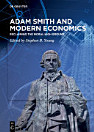
Adam Smith and Modern Economics: Reclaiming the Moral High Ground
Mar 2026 · Walter de Gruyter GmbH & Co KG
Ebook
270
Pages
Tools
info
About this ebook
For more than two centuries, economists and researchers have struggled with the conundrum of reconciling Adam Smith’s views on economics and ethics. While some held that Smith’s capitalism and free markets institutionalized selfishness, greed, inequality and injustice, others focused on his theory of the moral nature of all human persons and the application of conscience and self-restraint in capitalist activities. Adam Smith and Modern Economics suggests that neither of these two conventional understandings alone is accurate and conducive to human flourishing. Smith put markets in the context of morality, observing that markets serve best when our moral sentiments are followed. In a remarkable convergence of inductive thinking, the contributors to this book set a new standard of scholarship and insight for our understanding of Adam Smith’s contributions as a master of political economy, where politics brings forth decision-making about priorities and values. The contributions integrate morals, values, and the universal intangible capitals of sociality and human resourcefulness with the more materialistic side of economic activity to advocate a system seeking equilibrium. They posit that when ethics and economics are integrated, wealth can be created for the good of all. Commemorating the 250th anniversary of Adam Smith’s The Wealth of Nations, this new and sympathetic understanding of Smith’s intentions and accomplishment is essential reading for academics and students of economics, politicians and bureaucrats, public policy planners, social justice activists, executives, and professionals.
For more than two centuries, economists and researchers have struggled with the conundrum of reconciling Adam Smith’s views on economics and ethics. While some held that Smith’s capitalism and free markets institutionalized selfishness, greed, inequality and injustice, others focused on his theor...
Discover more
About the author
Stephen B. Young is the Global Executive Director of the Caux Round Table for Moral Capitalism, an international network of experienced business leaders who advocate a principled approach to global capitalism. He is the recipient of the Albert Nelson Marquis Lifetime Achievement Award, the highest honor extended by Marquis Who’s Who and has been included in Who's Who Commemorative Edition Book 2023-2024 for Lifetime Achievement. Young was educated at the International School Bangkok, Harvard College, and Harvard Law School and served with the US Agency for International Development in South Vietnam from 1968 to 1971 in the village development and counterinsurgency program. He later was a lawyer with Simpson, Thatcher and Bartlett in New York City and a member of the Council on Foreign Relations. Young was an Assistant Dean at the Harvard Law School and later Dean and Professor of Law at the Hamline University Law School. He is currently an advisor to the Convention of Independent Financial Advisors in Geneva and was a founder and a member of the Board of Magni Global Assets, an investment management firm now merged with Newday Impact Investments. He is a member of the Advisory Council to the Papal Fondazione Centemisus Annus Pro Pontifice, established by Pope (now Saint) John Paul II as a lay organization to promote Catholic Social Teachings. He has published articles on corporate social responsibility, enterprise valuation, public and private goods, Chinese jurisprudence, the culture and politics of Vietnam and Thailand, Native American law, the history of negligence, and the law of war.
Stephen B. Young is the Global Executive Director of the Caux Round Table for Moral Capitalism, an international network of experienced business leaders who advocate a principled approach to global capitalism. He is the recipient of the Albert Nelson Marquis Lifetime Achievement Award, the highes...
Rate this ebook
Tell us what you think.
Reading information
Smartphones and tablets
Install the Google Play Books app for Android and iPad/iPhone. It syncs automatically with your account and allows you to read online or offline wherever you are.
Laptops and computers
You can listen to audiobooks purchased on Google Play using your computer's web browser.
eReaders and other devices
To read on e-ink devices like Kobo eReaders, you'll need to download a file and transfer it to your device. Follow the detailed Help Center instructions to transfer the files to supported eReaders.