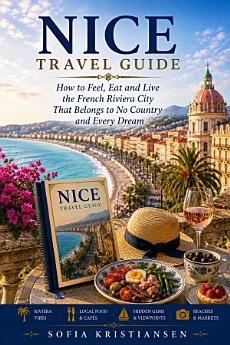
NICE TRAVEL GUIDE: How to Feel, Eat and Live the French Riviera City That Belongs to No Country and Every Dream
Sofía Kristiansen
Ebook
26
Pages
Tools
info
family_home
Eligible
info
About this ebook
Nice belongs to the Mediterranean culture that France and Italy share across a border twenty kilometers east of the city, and everything about it — the ochre facades, the baroque churches, the dialect, the food — reflects this productive ambiguity. The city that the English aristocracy made their winter destination in the nineteenth century, where Matisse spent the last thirty-seven years of his life chasing the light, and where Yves Klein found the blue he would name after himself, is also the city where the socca vendor sets up beside the Cours Saleya flower market each morning and where the salade Niçoise has never once included a cooked vegetable.
In this complete travel guide, Sofía Kristiansen takes you through every layer of the city: the Promenade des Anglais and the Baie des Anges, the Vieille Ville with its baroque churches and its morning market, the Matisse Museum and the Chagall Museum on the Cimiez hill, the Niçard cuisine built on chickpea flour and olive oil and the Mediterranean pantry, Monaco and Villefranche to the east, Cannes and Antibes to the west, and the Alpes-Maritimes hinterland rising from the coast to three thousand meters within an hour's drive. The light is real. This guide helps you find it.
Nice belongs to the Mediterranean culture that France and Italy share across a border twenty kilometers east of the city, and everything about it — the ochre facades, the baroque churches, the dialect, the food — reflects this productive ambiguity. The city that the English aristocracy made their...
Discover more
Rate this ebook
Tell us what you think.
Reading information
Smartphones and tablets
Install the Google Play Books app for Android and iPad/iPhone. It syncs automatically with your account and allows you to read online or offline wherever you are.
Laptops and computers
You can listen to audiobooks purchased on Google Play using your computer's web browser.
eReaders and other devices
To read on e-ink devices like Kobo eReaders, you'll need to download a file and transfer it to your device. Follow the detailed Help Center instructions to transfer the files to supported eReaders.