Skeletons: The Frame of Life
mars 2018 · Oxford University Press
E-bok
320
Sider
Verktøy
info
family_home
Kvalifisert
info
Om denne e-boken
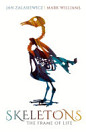
Over half a billion years ago life on earth took an incredible step in evolution, when animals learned to build skeletons. Using many different materials, from calcium carbonate and phosphate, and even silica, to make shell and bone, they started creating the support structures that are now critical to most living forms, providing rigidity and strength. Manifesting in a vast variety of forms, they provided the framework for sophisticated networks of life that fashioned the evolution of Earth's oceans, land, and atmosphere. Within a few tens of millions of years, all of the major types of skeleton had appeared. Skeletons enabled an unprecedented array of bodies to evolve, from the tiniest seed shrimp to the gigantic dinosaurs and blue whales. The earliest bacterial colonies constructed large rigid structures - stromatolites - built up by trapping layers of sediment, while the mega-skeleton that is the Great Barrier Reef is big enough to be visible from space. The skeletons of millions of coccolithophores that lived in the shallow seas of the Mesozoic built the white cliffs of Dover. These, and insects, put their scaffolding on the outside, as an exoskeleton, while vertebrates have endoskeletons. Plants use tubes of dead tissue for rigidity and transport of liquids - which in the case of tall trees need to be strong enough to extend 100 m or more from the ground. Others simply stitch together a coating from mineral grains on the seabed. In Skeletons, Jan Zalasiewicz and Mark Williams explore the incredible variety of the skeleton innovations that have enabled life to expand into a wide range of niches and lifestyles on the planet. Discussing the impact of climate change, which puts the formation of some kinds of skeleton at risk, they also consider future skeletons, including the possibility that we might increasingly incorporate metal and plastic elements into our own, as well as the possible materials for skeleton building on other planets.
Over half a billion years ago life on earth took an incredible step in evolution, when animals learned to build skeletons. Using many different materials, from calcium carbonate and phosphate, and even silica, to make shell and bone, they started creating the support structures that are now criti...
Oppdag mer
Om forfatteren
Mark Williams is Professor of Palaeobiology at Leicester University, and Dr Jan Zalasiewicz is Senior Lecturer in Palaeobiology, also at Leicester. Jan Zalasiewicz is the author of several books, including The Earth After Us (Oxford University Press, 2008); Rocks VSI (Oxford University Press, 2016); and The Planet in a Pebble (Oxford University Press, 2010), and appears regularly in the media as a commentator on the Anthropocene, extinctions, and other geological topics. Together they have authored two books, Ocean Worlds (Oxford University Press, 2014), and The Goldilocks Planet (Oxford University Press, 2012).
Mark Williams is Professor of Palaeobiology at Leicester University, and Dr Jan Zalasiewicz is Senior Lecturer in Palaeobiology, also at Leicester. Jan Zalasiewicz is the author of several books, including The Earth After Us (Oxford University Press, 2008); Rocks VSI (Oxford University Press, 201...
Vurder denne e-boken
Fortell oss hva du mener.
Hvordan lese innhold
Smarttelefoner og nettbrett
Installer Google Play Bøker-appen for Android og iPad/iPhone. Den synkroniseres automatisk med kontoen din og lar deg lese både med og uten nett – uansett hvor du er.
Datamaskiner
Du kan lytte til lydbøker du har kjøpt på Google Play, i nettleseren på datamaskinen din.
Lesebrett og andre enheter
For å lese på lesebrett som Kobo eReader må du laste ned en fil og overføre den til enheten din. Følg den detaljerte veiledningen i brukerstøtten for å overføre filene til støttede lesebrett.