About this ebook
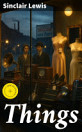
In 'Things', Sinclair Lewis offers a biting satire of American consumerism and materialism during the early 20th century, capturing the tensions between individual values and societal expectations. The novel's style is marked by Lewis's incisive wit and keen observational prowess, employing vivid characterizations and a rich narrative that critiques the hollow pursuits of wealth and status. Through the lens of ordinary American life, he explores profound themes of disillusionment, conformity, and the elusive quest for meaning in a rapidly modernizing world, thereby situating the work within the broader context of the literary movement towards realism and social critique prevalent in his time. Sinclair Lewis, the first American author to receive the Nobel Prize in Literature (1930), was known for his unflinching examinations of American life. His background in journalism and keen social insights informed his writing, allowing him to articulate the complexities and paradoxes of American identity. Lewis's own experiences growing up in small-town America fueled his desire to critique societal norms, making 'Things' a particularly personal and impactful exploration of the American psyche during a time of significant change. This novel is highly recommended for readers interested in American literature and critical social commentary. 'Things' is not only a reflection of Lewis's prescient observations but also a timeless exploration of the human condition, encouraging readers to reflect on their own lives amid the relentless drive for material success. In this enriched edition, we have carefully created added value for your reading experience: - A succinct Introduction situates the work's timeless appeal and themes. - The Synopsis outlines the central plot, highlighting key developments without spoiling critical twists. - A detailed Historical Context immerses you in the era's events and influences that shaped the writing. - An Author Biography reveals milestones in the author's life, illuminating the personal insights behind the text. - A thorough Analysis dissects symbols, motifs, and character arcs to unearth underlying meanings. - Reflection questions prompt you to engage personally with the work's messages, connecting them to modern life. - Hand‐picked Memorable Quotes shine a spotlight on moments of literary brilliance. - Interactive footnotes clarify unusual references, historical allusions, and archaic phrases for an effortless, more informed read.
In 'Things', Sinclair Lewis offers a biting satire of American consumerism and materialism during the early 20th century, capturing the tensions between individual values and societal expectations. The novel's style is marked by Lewis's incisive wit and keen observational prowess, employing vivid...
Discover more
About the author
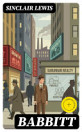
Sinclair Lewis (1885–1951), born Harry Sinclair Lewis, was an American novelist, short-story writer, and playwright. Considered a sharp social critic of American life and a forerunner of subsequent generations of writers who would dissect domestic society, Lewis earned renown for his incisive depictions of the American culture in the early 20th century. He achieved significant success with his 1920 novel 'Main Street,' which satirically illustrated the limitations and foibles of small-town life. Lewis's ability to capture the essence of the American spirit was further exemplified in his works such as 'Babbitt' (1922), 'Arrowsmith' (1925), 'Elmer Gantry' (1927), and 'Dodsworth' (1929), each analyzing different facets of American society. One of his notable achievements includes becoming the first American to receive the Nobel Prize in Literature, awarded in 1930. His literary style is characterized by keen social observation, acerbic wit, and the skillful use of satire. 'Things' is a lesser-known work in Lewis's oeuvre, but like his more famous novels, it is permeated with his distinctive thematic concerns and narrative voice. Lewis's legacy lies in his trailblazing portrayal of the American experience, his sharp critiques of materialism and conformity, and his influence on subsequent writers who continued exploring the complexities of life in the United States.
Sinclair Lewis (1885–1951), born Harry Sinclair Lewis, was an American novelist, short-story writer, and playwright. Considered a sharp social critic of American life and a forerunner of subsequent generations of writers who would dissect domestic society, Lewis earned renown for his incisive dep...
Rate this ebook
Tell us what you think.
Reading information
Smartphones and tablets
Install the Google Play Books app for Android and iPad/iPhone. It syncs automatically with your account and allows you to read online or offline wherever you are.
Laptops and computers
You can listen to audiobooks purchased on Google Play using your computer's web browser.
eReaders and other devices
To read on e-ink devices like Kobo eReaders, you'll need to download a file and transfer it to your device. Follow the detailed Help Center instructions to transfer the files to supported eReaders.