About this ebook
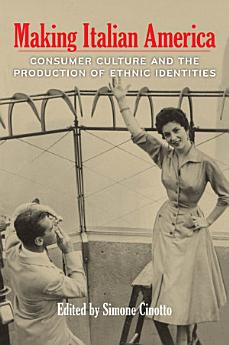
How do immigrants and their children forge their identities in a new land—and how does the ethnic culture they create thrive in the larger society? Making Italian America brings together new scholarship on the cultural history of consumption, immigration, and ethnic marketing to explore these questions by focusing on the case of an ethnic group whose material culture and lifestyles have been central to American life: Italian Americans.
As embodied in fashion, film, food, popular music, sports, and many other representations and commodities, Italian American identities have profoundly fascinated, disturbed, and influenced American and global culture. Discussing in fresh ways topics as diverse as immigrant women’s fashion, critiques of consumerism in Italian immigrant radicalism, the Italian American influence in early rock ’n’ roll, ethnic tourism in Little Italy, and Guido subculture, Making Italian America recasts Italian immigrants and their children as active consumers who, since the turn of the twentieth century, have creatively managed to articulate relations of race, gender, and class and create distinctive lifestyles out of materials the marketplace offered to them. The success of these mostly working-class people in making their everyday culture meaningful to them as well as in shaping an ethnic identity that appealed to a wider public of shoppers and spectators looms large in the political history of consumption. Making Italian America appraises how immigrants and their children redesigned the market to suit their tastes and in the process made Italian American identities a lure for millions of consumers.
Fourteen essays explore Italian American history in the light of consumer culture, across more than a century-long intense movement of people, goods, money, ideas, and images between Italy and the United States—a diasporic exchange that has transformed both nations. Simone Cinotto builds an imaginative analytical framework for understanding the ways in which ethnic and racial groups have shaped their collective identities and negotiated their place in the consumers’ emporium and marketplace.
Grounded in the new scholarship in transnational U.S. history and the transfer of cultural patterns, Making Italian America illuminates the crucial role that consumption has had in shaping the ethnic culture and diasporic identities of Italians in America. It also illustrates vividly why and how those same identities—incorporated in commodities, commercial leisure, and popular representations—have become the object of desire for millions of American and global consumers.
How do immigrants and their children forge their identities in a new land—and how does the ethnic culture they create thrive in the larger society? Making Italian America brings together new scholarship on the cultural history of consumption, immigration, and ethnic marketing to explore these que...
Discover more
About the author
Simone Cinotto teaches history at the University of Gastronomic Sciences, Pollenzo, Italy. He is the author of The Italian American Table: Food, Family, and Community in New York City and Soft Soil, Black Grapes: The Birth of Italian Winemaking in California.
Simone Cinotto teaches history at the University of Gastronomic Sciences, Pollenzo, Italy. He is the author of The Italian American Table: Food, Family, and Community in New York City and Soft Soil, Black Grapes: The Birth of Italian Winemaking in California.
Rate this ebook
Tell us what you think.
Reading information
Smartphones and tablets
Install the Google Play Books app for Android and iPad/iPhone. It syncs automatically with your account and allows you to read online or offline wherever you are.
Laptops and computers
You can listen to audiobooks purchased on Google Play using your computer's web browser.
eReaders and other devices
To read on e-ink devices like Kobo eReaders, you'll need to download a file and transfer it to your device. Follow the detailed Help Center instructions to transfer the files to supported eReaders.