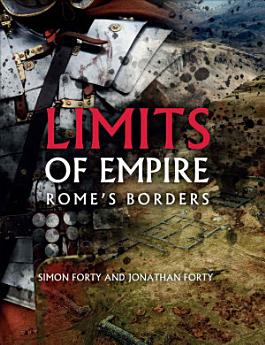
Limits of Empire: Rome's Borders

· Casemate
Ebook
200
Pages
Eligible

About this ebook

"The book is accessible to those who have no insightful knowledge and familiarity with the history of the Roman frontiers . . . an enjoyable read." — Bryn Mawr Classical Review

The borders of the Roman Empire were frontiers that were often wild and dangerous. By AD 117 and the accession of Hadrian, the empire had reached its peak, and its wealth was coveted by those outside its borders. Just as today those from poorer countries try to make their way into Europe or North America, so those outside the empire wanted to make their way into the Promised Land—for trade, for improvement of their lives or for plunder. Thus the Roman borders became a mix—just as our borders are today—of defensive bulwark against enemies but also control areas where import and export taxes were levied, and entrance was controlled.

This book examines these frontiers of the empire, looking at the way they were constructed and manned and how that changed over the years. It looks at the physical barriers—from the walls in Britain to the Fossatum Africae in the desert. It looks at the traders and the prices that were paid for the traffic of goods. It looks at the way that civil settlements—vici—grew up around the forts and fortlets and what life was like for soldiers, sailors and civilians.

As well as artefacts of the period, the book provides a guidebook to top Roman museums and a gazetteer of visitable sites.

"Superbly illustrated in full color throughout . . . an impressively informative, exceptionally well written, deftly organized and presented study." — Midwest Book Review

"The book is accessible to those who have no insightful knowledge and familiarity with the history of the Roman frontiers . . . an enjoyable read." — Bryn Mawr Classical Review The borders of the Roman Empire were frontiers that were often wild and dangerous. By AD 117 and the accession of Hadri...

Discover more

About the author

Simon Forty was educated in Dorset and the north of England before reading history at London University's School of Slavonic and East European Studies. He has been involved in publishing since the mid-1970s, first as editor and latterly as author. Son of author and RAC Tank Museum curator George Forty, he has continued in the family tradition writing mainly on historical and military subjects including books on the Napoleonic Wars and the two world wars. Recently he has produced a range of highly illustrated books on the Normandy battlefields, the Atlantic Wall and the liberation of the Low Countries with co-author Leo Marriott.
Simon Forty was educated in Dorset and the north of England before reading history at London University's School of Slavonic and East European Studies. He has been involved in publishing since the mid-1970s, first as editor and latterly as author. Son of author and RAC Tank Museum curator George ...

Rate this ebook

Tell us what you think.

Reading information

Smartphones and tablets
Install the Google Play Books app for Android and iPad/iPhone. It syncs automatically with your account and allows you to read online or offline wherever you are.
Laptops and computers
You can listen to audiobooks purchased on Google Play using your computer's web browser.
eReaders and other devices
To read on e-ink devices like Kobo eReaders, you'll need to download a file and transfer it to your device. Follow the detailed Help Center instructions to transfer the files to supported eReaders.