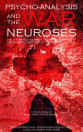
Psycho-Analysis and the War Neuroses
Aug 2022 · DigiCat
Ebook
69
Pages
family_home
Eligible
info
About this ebook
In 'Psycho-Analysis and the War Neuroses,' the profound impact of war on the psyche is dissected through a rich tapestry of perspectives. This collection delves into the complex interplay between trauma and mind, reflecting on the clinical and theoretical developments that define early 20th-century psychoanalytic thought. The anthology captures a range of styles, from the rigorous scientific analysis to more narrative-driven explorations, each contributing uniquely to the overarching theme of war-induced psychological distress. The standout pieces not only underscore theoretical advancements but also reveal the human dimension behind clinical observations, offering a nuanced understanding of trauma's enduring effects. The contributing authors stand at the forefront of psychoanalytic evolution, each bringing distinct insights molded by their backgrounds and intellectual quests. Renowned figures such as Sigmund Freud, Ernest Jones, Karl Abraham, Sándor Ferenczi, and Ernst Simmel play pivotal roles, weaving their observations into a cohesive dialogue that aligns with the broader psychoanalytic movement and its historical context. The collection harmonizes these varied perspectives, reflecting on their shared mission to interpret and alleviate war's psychological toll, thus enlightening readers on the multifaceted nature of neuroses born of conflict. By assembling these pioneering works, the anthology offers an unparalleled opportunity for readers to engage with diverse psychoanalytic paradigms in one volume. It is a foundational text for those interested in the convergence of psychology, history, and social science, presenting educational insights into the development of therapeutic practices and the persistent quest to understand war's impact on the human mind. This anthology is an essential addition for anyone aiming to comprehend the intricate dialogues between early psychoanalytic theorists and the pervasive pathologies of war.
In 'Psycho-Analysis and the War Neuroses,' the profound impact of war on the psyche is dissected through a rich tapestry of perspectives. This collection delves into the complex interplay between trauma and mind, reflecting on the clinical and theoretical developments that define early 20th-centu...
About the author
Sigmund Freud (1856-1939), an Austrian neurologist, is universally recognized as the father of psychoanalysis. A groundbreaking thinker, his theories on the unconscious mind, mechanisms of repression, and the role of dreams have profoundly influenced the landscape of psychology. Freud's interests spanned much beyond neurology, venturing into areas such as interpretation of dreams, sexuality, and the psyche's structure, sub-dividing it into the id, ego, and superego as detailed in works including 'The Ego and the Id.' His seminal book 'Psycho-Analysis and the War Neuroses' (1919) further illustrates his innovative clinical approach towards psychological traumas associated with war - a testament to his enduring inquiry into human suffering and mind mechanisms. Freud's literary style is characterized by a meticulous investigation into the human condition, an insightful blend of empirical observations with theoretical constructs. His voluminous work has not only paved the way for modern psychotherapy but has also permeated the fields of literature, art, and philosophy, validating his stature as one of the most significant intellectuals of the 20th century.
Sigmund Freud (1856-1939), an Austrian neurologist, is universally recognized as the father of psychoanalysis. A groundbreaking thinker, his theories on the unconscious mind, mechanisms of repression, and the role of dreams have profoundly influenced the landscape of psychology. Freud's interests...
Rate this ebook
Tell us what you think.
Reading information
Smartphones and tablets
Install the Google Play Books app for Android and iPad/iPhone. It syncs automatically with your account and allows you to read online or offline wherever you are.
Laptops and computers
You can listen to audiobooks purchased on Google Play using your computer's web browser.
eReaders and other devices
To read on e-ink devices like Kobo eReaders, you'll need to download a file and transfer it to your device. Follow the detailed Help Center instructions to transfer the files to supported eReaders.