eBook 정보
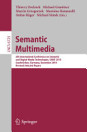
The rapid development in the area of sensor technology has been responsible for a number of societal phenomena like UGC (User Generated Content) or QS (Quantified Self). Machine learning algorithms benefit a lot from the availability of such huge volumes of digital data. For example, new technical solutions for challenges caused by the demographic change (ageing society) can be proposed in this way, especially in the context of healthcare systems in industrialised countries.
The goal of this book is to present selected algorithms for Visual Scene Analysis (VSA, processing UGC) as well as for Human Data Interpretation (HDI, using data produced within the QS movement) and to expose a joint methodological basis between these two scientific directions. While VSA approaches have reached impressive robustness towards human-like interpretation of visual sensor data, HDI methods are still of limited semantic abstraction power. Using selected state-of-the-art examples, this book shows the maturity of approaches towards closing the semantic gap in both areas, VSA and HDI.
The rapid development in the area of sensor technology has been responsible for a number of societal phenomena like UGC (User Generated Content) or QS (Quantified Self). Machine learning algorithms benefit a lot from the availability of such huge volumes of digital data. For example, new technic...
콘텐츠 둘러보기
이 eBook 평가
의견을 알려주세요.
읽기 정보
스마트폰 및 태블릿
노트북 및 컴퓨터
컴퓨터의 웹브라우저를 사용하여 Google Play에서 구매한 오디오북을 들을 수 있습니다.
eReader 및 기타 기기
Kobo eReader 등의 eBook 리더기에서 읽으려면 파일을 다운로드하여 기기로 전송해야 합니다. 지원되는 eBook 리더기로 파일을 전송하려면 고객센터에서 자세한 안내를 따르세요.