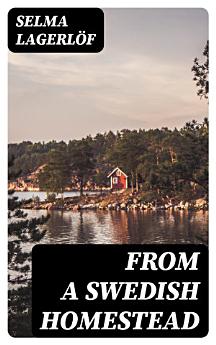
From a Swedish Homestead
Jun 2022 · DigiCat
Ebook
205
Pages
family_home
Eligible
info
About this ebook
Selma Lagerlöf's 'From a Swedish Homestead' offers a panoramic view into the verdant landscapes and rich cultural tapestry of Swedish life. Each narrative in this assemblage of short stories weaves traditional motifs with incisive character studies, reflecting Lagerlöf's capacity for lyrical prose and her deeply rooted sense of place. From the heritage of an distinguished country house to the regal sagas in 'Queens at Kungahälla,' the collection captures the essence of folklore and history, dressed in the elegant simplicity and transformative power of Lagerlöf's literary voice. This work situates itself comfortably in the Scandinavian literary tradition, marrying the keen observation of a regionalist writer with universal themes of humanity.nSelma Lagerlöf, a laureate of the Nobel Prize in Literature, crafts her stories with autobiographical undertones and an understanding of human psychology that belie her status as a pioneer among female writers. Her experiences growing up in Värmland, Sweden, resonate in the pastoral elements and the homage to Scandinavian legends found within this book. Lagerlöf's skilled narrative hand turns local tales into universal truths, revealing her as an empathetic storyteller and custodian of her national heritage.n'Readerの abな reservocêe期待が beholらしい of Swedeんの patchworkの tradition and innovation. Marrying myth with palpable reality, Lagerlöf's work is a cultural artifact as much as it is literary delight—perfect for readers who revel in pastoral narratives, historical fiction enthusiasts, and those with a predilection for classic tales reimagined with a contemporary sensibility. 'From a Swedish Homestead' stands as a testament to the enduring power of storytelling and the luminous craft of one of Sweden's most cherished authors.
Selma Lagerlöf's 'From a Swedish Homestead' offers a panoramic view into the verdant landscapes and rich cultural tapestry of Swedish life. Each narrative in this assemblage of short stories weaves traditional motifs with incisive character studies, reflecting Lagerlöf's capacity for lyrical pros...
Discover more
About the author
Selma Lagerlöf, born on November 20, 1858, in Mårbacka, Värmland, Sweden, was an iconic figure in Swedish literature. She is celebrated for her rich storytelling which often wove in folklore, legend, and her deep connection to rural Sweden. Lagerlöf's literary career was marked by her exquisite narrative style and her ability to breathe life into the characters and landscapes of her homeland. Her novel 'Gösta Berlings Saga' (1891) heralded her as a major Swedish writer, which was further cemented by the publication of her collection 'From a Swedish Homestead' ('En herrgårdssägen', 1899). This book is a testament to her storytelling prowess, painting vivid pictures of the lives and traditions of the Swedish countryside. Lagerlöf's contributions to literature were acknowledged on the highest level when she became the first woman to win the Nobel Prize in Literature in 1909, celebrated for 'the lofty idealism, vivid imagination and spiritual perception that characterizes her writings' (Nobelprize.org). A pioneer for women in literature, Selma Lagerlöf's work transcends time, with an appeal that remains contemporary. Her legacy is maintained at her birthplace, Mårbacka, which has been preserved as a memorial estate, ensuring that her indelible mark on literature and her contributions to Swedish cultural heritage are remembered.
Selma Lagerlöf, born on November 20, 1858, in Mårbacka, Värmland, Sweden, was an iconic figure in Swedish literature. She is celebrated for her rich storytelling which often wove in folklore, legend, and her deep connection to rural Sweden. Lagerlöf's literary career was marked by her exquisite n...
Rate this ebook
Tell us what you think.
Reading information
Smartphones and tablets
Install the Google Play Books app for Android and iPad/iPhone. It syncs automatically with your account and allows you to read online or offline wherever you are.
Laptops and computers
You can listen to audiobooks purchased on Google Play using your computer's web browser.
eReaders and other devices
To read on e-ink devices like Kobo eReaders, you'll need to download a file and transfer it to your device. Follow the detailed Help Center instructions to transfer the files to supported eReaders.