About this ebook
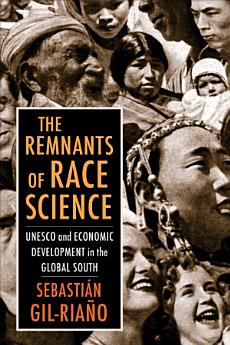
After World War II, UNESCO launched an ambitious international campaign against race prejudice. Casting racism as a problem of ignorance, it sought to reduce prejudice by spreading the latest scientific knowledge about human diversity to instill “mutual understanding” between groups of people. This campaign has often been understood as a response led by British and U.S. scientists to the extreme ideas that informed Nazi Germany. Yet many of its key figures were social scientists either raised in or closely involved with South America and the South Pacific.
The Remnants of Race Science traces the influence of ideas from the Global South on UNESCO’s race campaign, illuminating its relationship to notions of modernization and economic development. Sebastián Gil-Riaño examines the campaign participants’ involvement in some of the most ambitious development projects of the postwar period. In challenging race prejudice, these experts drew on ideas about race that emphasized plasticity and mutability, in contrast to the fixed categories of scientific racism. Gil-Riaño argues that these same ideas legitimated projects of economic development and social integration aimed at bringing ostensibly “backward” indigenous and non-European peoples into the modern world. He also shows how these experts’ promotion of studies of race relations inadvertently spurred a deeper reckoning with the structural and imperial sources of racism as well as the aftermath of the transatlantic slave trade.
Shedding new light on the postwar refashioning of ideas about race, this book reveals how internationalist efforts to dismantle racism paved the way for postcolonial modernization projects.
After World War II, UNESCO launched an ambitious international campaign against race prejudice. Casting racism as a problem of ignorance, it sought to reduce prejudice by spreading the latest scientific knowledge about human diversity to instill “mutual understanding” between groups of people. Th...
Discover more
About the author
Sebastián Gil-Riaño is an assistant professor in the History and Sociology of Science Department and the Center for Latin American and Latinx Studies at the University of Pennsylvania.
Sebastián Gil-Riaño is an assistant professor in the History and Sociology of Science Department and the Center for Latin American and Latinx Studies at the University of Pennsylvania.
Rate this ebook
Tell us what you think.
Reading information
Smartphones and tablets
Install the Google Play Books app for Android and iPad/iPhone. It syncs automatically with your account and allows you to read online or offline wherever you are.
Laptops and computers
You can listen to audiobooks purchased on Google Play using your computer's web browser.
eReaders and other devices
To read on e-ink devices like Kobo eReaders, you'll need to download a file and transfer it to your device. Follow the detailed Help Center instructions to transfer the files to supported eReaders.