About this ebook
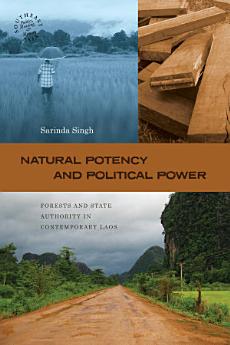
Forests, as physical entities, have received considerable scholarly attention in political studies of Asia and beyond. Much less notice has been paid to the significance of forests as symbols that enable commentary on identity, aspirations, and authority. Natural Potency and Political Power, an innovative exploration of the social and political importance of forests in contemporary Laos, challenges common views of the rural countryside as isolated and disconnected from national social debates and politics under an authoritarian regime. It offers instead a novel understanding of local perspectives under authoritarianism, demonstrating that Lao people make implicit political statements in their commentary on forests and wildlife; and showing that, in addition to being vital material resources, forests (and their natural potency) are linked in the minds of many Lao to the social and political power of the state.
Sarinda Singh explores the intertwining of symbolic and material concerns in local debates over conservation and development, the popularity of wildlife consumption, the particular importance of elephants, and forest loss and mismanagement. In doing so, she draws on ethnographic fieldwork around Vientiane, the capital, and Nakai, site of the contentious Nam Theun 2 hydropower project—places that are broadly reflective of the divide between urban prosperity and rural poverty. Nam Theun 2, supported by the World Bank, highlights the local, regional, and global dynamics that influence discussions of forest resources in Laos. Government officials, rural villagers, and foreign consultants all contribute to competing ideas about forests and wildlife.
Singh advances research on forest politics by rethinking how ideas about nature influence social life. Her work refutes the tendency to see modern social life as independent of historical influences, and her attention to viewpoints both inside and outside the state prompts an understanding of authoritarian regimes as not only sources of repression, but also sites of negotiation, engagement, and debate about the legitimacy of social inequalities.
Forests, as physical entities, have received considerable scholarly attention in political studies of Asia and beyond. Much less notice has been paid to the significance of forests as symbols that enable commentary on identity, aspirations, and authority. Natural Potency and Political Power, an i...
Discover more
Rate this ebook
Tell us what you think.
Reading information
Smartphones and tablets
Install the Google Play Books app for Android and iPad/iPhone. It syncs automatically with your account and allows you to read online or offline wherever you are.
Laptops and computers
You can listen to audiobooks purchased on Google Play using your computer's web browser.
eReaders and other devices
To read on e-ink devices like Kobo eReaders, you'll need to download a file and transfer it to your device. Follow the detailed Help Center instructions to transfer the files to supported eReaders.