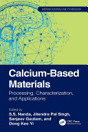
Battery Management Systems for Electric Vehicles: Fundamentals, Design Strategies, and Future Trends

·
· Academic Press
Ebook
350
Pages
Eligible
This book will become available on March 1, 2027. You will not be charged until it is released.

About this ebook

Battery Management Systems for Electric Vehicles: Fundamentals, Design Strategies, and Future Trends examines modern electric vehicle technology, focusing on the crucial role of Battery Management Systems (BMS). Written for engineers, researchers, and senior students, this comprehensive guide provides a thorough examination of battery fundamentals, system design considerations, and advanced modeling techniques. From exploring key battery chemistries and thermal management solutions to detailing cutting-edge control strategies and fault diagnosis methods, the book underscores the interdisciplinary nature of EV development. Case studies illustrate real-world applications, highlighting both successes and lessons learned, while forward-looking chapters investigate emerging technologies—such as AI-driven monitoring and solid-state batteries—poised to shape the next generation of EVs. Through clear explanations, detailed illustrations, and practical insights, readers will gain the knowledge needed to optimize EV performance, enhance safety, and extend battery longevity. - By spanning battery chemistry through advanced battery management systems or BMS algorithms, "Battery Management Systems for Electric Vehicles" provides a single resource that encapsulates both theoretical underpinnings and hands-on design practices - The book practical examples and industry examples to illustrate common pitfalls and innovative solutions, offering invaluable lessons for readers working on commercial or research-based EV projects - The book integrates materials science, electrical engineering, and automotive design to highlight how collaboration across these fields enhances battery performance and reduces system-level failures - "Battery Management Systems for Electric Vehicles" includes discussions of next-generation battery technologies, such as solid-state systems and AI-driven diagnostics, prepare readers for upcoming market shifts and regulatory changes
Battery Management Systems for Electric Vehicles: Fundamentals, Design Strategies, and Future Trends examines modern electric vehicle technology, focusing on the crucial role of Battery Management Systems (BMS). Written for engineers, researchers, and senior students, this comprehensive guide pro...

Discover more

About the author

Dr Sanjeev Gautam leads an independent research group, the Advanced Functional Materials Lab., at Panjab University, India. He has 25+ years of experience with over 161+ international publications. He completed his PhD (2007) in condensed matter physics at the Centre of Advanced Study in Physics, Panjab University. He worked as a grid-computing administrator for the CMS (LHC) project. Dr Gautam then worked at the Korea Institute of Science and Technology, South Korea (2007–2014). At Panjab University (2014 onwards), he has received international and national grants in the field of nanotechnology sustainable energy, food technology, catalysts, and environmental safety

Professor Sanjeev Manhas is a Professor in Electronics and Communication Engineering at IIT Roorkee. He earned his Ph.D. from De Montfort University, UK, and M.Tech. from IIT Madras, India. His research focuses on 3D NAND, FeFET, nanoscale DRAM, neuromorphic computing, nanoscale transistors, MEMS energy harvesting, and CMOS reliability. He has held key administrative roles, including Faculty-in-Charge at TIDES Business Incubator, and Chairman of various research committees at IIT Roorkee. He has led major research projects funded by DST, MeitY, DRDO, and Applied Materials. Professor Manhas holds patents in semiconductor devices and nanotechnology and actively contributes as an IEEE Senior Member, and journal reviewer, advancing microelectronics and semiconductor research
Dr Sanjeev Gautam leads an independent research group, the Advanced Functional Materials Lab., at Panjab University, India. He has 25+ years of experience with over 161+ international publications. He completed his PhD (2007) in condensed matter physics at the Centre of Advanced Study in Physics,...

Reading information

Smartphones and tablets
Install the Google Play Books app for Android and iPad/iPhone. It syncs automatically with your account and allows you to read online or offline wherever you are.
Laptops and computers
You can listen to audiobooks purchased on Google Play using your computer's web browser.
eReaders and other devices
To read on e-ink devices like Kobo eReaders, you'll need to download a file and transfer it to your device. Follow the detailed Help Center instructions to transfer the files to supported eReaders.