About this ebook
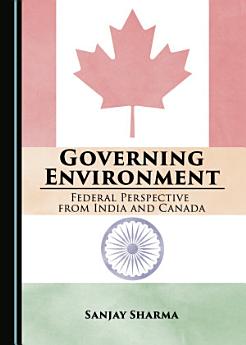
It presents a uniquely exploration of environmental governance from this hitherto under-researched perspective, and simultaneously, in order to provide a better conceptual understanding, examines the different theories of federalism and modes of distribution of powers, authorities and functions. Given their symmetrical federal experiences, India and Canada naturally qualify as the domain of study, with both being known as twin federal nations. Issues of environment have been factorised and classified according to their critical significance in terms of policy choices. The combinatorial structure has been evaluated in terms of better federal management of environment. In the process, many new dimensions of federalism and environment have emerged, which may contribute to the critical mass of knowledge on the subject.
This book makes a departure from the general mono-construction of the environment as a restricted unit of knowledge available only to a specialist. Broadly following an interdisciplinary logic of formation of idea, this study is highly relevant in generating a new perspective on environmental research. It defines environment as a system which requires careful redrafting and reworking of three structures of relationships, namely between man and environment, between resource community and the state, and between inter-governmental contestations.
Discover more
About the author
Sanjay Sharma is an Assistant Professor of Political Science at the Army Cadet College of the Indian Military Academy, Dehradun, India. He received a doctorate in Federal Studies from the Center for Federal Studies, Jamia Hamdard, and has published research papers and book chapters on the federal governance of disasters in India and Canada. His research interests are federalism and environmental governance, disaster management, Climate Change and the Indian political system.