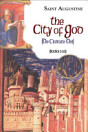
City of God (Summarized Edition): Enriched edition. Christian philosophy and theology in the 5th-century Roman Empire: original sin, free will, and divine omniscience in Western thought
Jan 2026 · Quickie Classics
Ebook
355
Pages
family_home
Eligible
info
About this ebook
City of God, in twenty-two books, answers pagan indictments after the sack of Rome and builds a theology of history. Augustine opposes the earthly city, driven by libido dominandi, to the City of God, ordered by charity. Blending Scripture, Roman historiography, and Platonizing philosophy, he critiques civil religion and divination, treats providence and freedom, and narrates creation to consummation in a style at once polemical, pastoral, and encyclopedic. Augustine, bishop of Hippo in North Africa, brought the craft of a former rhetor, the conscience of a convert, and the learning of a reader of Cicero and Plotinus. Written between 413 and 426 and addressed in part to the official Marcellinus, the treatise arose from pastoral necessity: to steady a shaken Roman elite, answer pagan critics, and clarify for Christians the mixed condition of the saeculum. Students of theology, philosophy, and political thought will find a bracing account of the limits of politics and the ordering of loves. City of God rewards patient study for its diagnosis of idolatry, its account of virtue under grace, and its eschatological hope, an indispensable guide beyond the illusions of empire. Quickie Classics summarizes timeless works with precision, preserving the author's voice and keeping the prose clear, fast, and readable—distilled, never diluted. Enriched Edition extras: Introduction · Synopsis · Historical Context · Author Biography · Brief Analysis · 4 Reflection Q&As · Editorial Footnotes.
City of God, in twenty-two books, answers pagan indictments after the sack of Rome and builds a theology of history. Augustine opposes the earthly city, driven by libido dominandi, to the City of God, ordered by charity. Blending Scripture, Roman historiography, and Platonizing philosophy, he cri...
Discover more
About the author
Augustine of Hippo (354-430), also known as Saint Augustine, was a theologian, philosopher, and the bishop of Hippo Regius in Numidia, Roman North Africa. His writings influenced the development of Western philosophy and Western Christianity, and he is viewed as one of the most important Church Fathers of the Latin Church in the Patristic Period. His many important works include The City of God, On Christian Doctrine, and Confessions.
Augustine of Hippo (354-430), also known as Saint Augustine, was a theologian, philosopher, and the bishop of Hippo Regius in Numidia, Roman North Africa. His writings influenced the development of Western philosophy and Western Christianity, and he is viewed as one of the most important Church F...
Rate this ebook
Tell us what you think.
Reading information
Smartphones and tablets
Install the Google Play Books app for Android and iPad/iPhone. It syncs automatically with your account and allows you to read online or offline wherever you are.
Laptops and computers
You can listen to audiobooks purchased on Google Play using your computer's web browser.
eReaders and other devices
To read on e-ink devices like Kobo eReaders, you'll need to download a file and transfer it to your device. Follow the detailed Help Center instructions to transfer the files to supported eReaders.