About this ebook
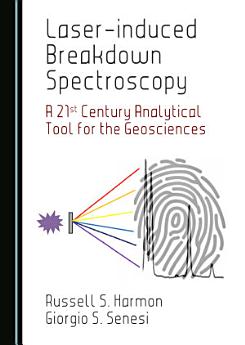
This book is about application of the rapidly-maturing analytical technology known as laser-induced breakdown spectroscopy (LIBS) to the geosciences, a field that depends on knowledge about the chemical composition of the different media (atmospheric gas; seawater, surface water and groundwater; minerals, rocks and soils) that comprise our planet. In LIBS, a rapidly-pulsed laser beam is focused onto a sample to form a plasma containing its constituent elements, with spectral analysis of emitted light used to detect and quantify the elements present. LIBS technology has advanced rapidly in recent years by the development of handheld analyzers for use outside of the traditional laboratory setting in the ambient environment for on-site analysis and bespoke LIBS systems for unique applications not possible with other analytical technologies. LIBS is capable of qualitative and quantitative analysis of most elements in the periodic table. LIBS can also be used for rapid microscale compositional imaging. After reviewing the basic physics of LIBS and the current state of LIBS technology, this book describes and illustrates the application of LIBS across the broad spectrum of the terrestrial geosciences.
This book is about application of the rapidly-maturing analytical technology known as laser-induced breakdown spectroscopy (LIBS) to the geosciences, a field that depends on knowledge about the chemical composition of the different media (atmospheric gas; seawater, surface water and groundwater; ...
Discover more
About the author
Dr Russell S. Harmon is currently an adjunct professor in the Department of Marine, Earth, and Atmospheric Sciences at North Carolina State University in Raleigh, NC (USA). Before retiring as Director of the US Army Corps of Engineers International Research Office in London (UK) in 2017, Dr Harmon had a career in academia and government services. Dr Harmon holds a BA in geology from the University of Texas-Austin (USA), a MS in geochemistry from the Pennsylvania State University (USA), and a PhD from McMaster University (Canada), and has held academic positions at Michigan State University (USA), the Scottish Universities Research and Reactor Centre of Glasgow University, and Southern Methodist University (USA).
Dr Giorgio S. Senesi is a geologist and senior researcher at the Italian National Council Research and Institute for Plasma Science and Technology in Bari, Italy. He holds a BA/MS in Vulcanology and PhD in Earth Sciences from the University of Bari. He has been a Post-Doctoral Fellow at the Department of Plant and Soil Sciences at the University of Delaware in Newark in the USA and a researcher at the Centro Laser of Valenzano in Bari. He is co-Editor of the 2023 book African Meteorites. He holds an Honorary Membership with the University Museum of Meteorites in Morocco.
Dr Russell S. Harmon is currently an adjunct professor in the Department of Marine, Earth, and Atmospheric Sciences at North Carolina State University in Raleigh, NC (USA). Before retiring as Director of the US Army Corps of Engineers International Research Office in London (UK) in 2017, Dr Harmo...
Rate this ebook
Tell us what you think.
Reading information
Smartphones and tablets
Install the Google Play Books app for Android and iPad/iPhone. It syncs automatically with your account and allows you to read online or offline wherever you are.
Laptops and computers
You can listen to audiobooks purchased on Google Play using your computer's web browser.
eReaders and other devices
To read on e-ink devices like Kobo eReaders, you'll need to download a file and transfer it to your device. Follow the detailed Help Center instructions to transfer the files to supported eReaders.