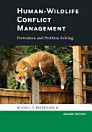
Wildlife Damage Management: Prevention, Problem Solving, and Conflict Resolution
About this ebook
Whether you are a student in a wildlife degree program or a professional wildlife biologist, you will find all the up-to-date information on wildlife damage in the pages of this clear, comprehensive text. Wildlife Damage Management covers every imaginable topic including:
• pertinent biological and ecological concepts
• individual-, population-, and ecosystem-level effects
• survey techniques
• management methods
• human dimensions
• economic issues
• legal and political aspects
• damage management strategies
Authors Russell F. Reidinger, Jr., and James E. Miller explain the evolution of wildlife damage management, differentiate facts from myths, and detail the principles and techniques a professional biologist needs to know. The book discusses native as well as exotic invasive species, zoonotic diseases, hazards to endangered or threatened fauna and flora, and damage to crops, livestock, and property. Reidinger and Miller argue that, in recent years, the rate of undesirable human-wildlife interactions has risen in many areas, owing in part to the expansion of residences into places formerly wild or agricultural, making wildlife damage management even more relevant.
From suburban deer eating gardens and shrubs, to mountain lions threatening pets and people, to accidentally introduced species outcompeting native species, Reidinger and Miller show how proper management can reduce wildlife damage to an acceptable, cost-effective level. An extensive section on available resources, a glossary that explains terms and concepts, and detailed figures will aid both students and seasoned professionals. Instructors will find this text arranged perfectly for a semester-long course. The end-of-chapter questions will allow students to ponder the ways wildlife damage management concepts can be put into practice. For those already working in the field—biologists and managers with federal, state, or international agencies—Wildlife Damage Management will serve as an ideal reference book. Destined to set the tone of wildlife damage conversations for the next decade and beyond, Reidinger and Miller belongs on the shelf of all wildlife professionals.
Discover more
About the author
Russell F. Reidinger, Jr., is a former director, National Wildlife Research Center, USDA APHIS / Wildlife Services, and an adjunct professor in the Department of Agriculture and Environmental Sciences at Lincoln University in Jefferson City, Missouri, and in the School of Natural Resources, University of Missouri, Columbia. James E. Miller is a professor emeritus in the Department of Wildlife, Fisheries, and Aquaculture at Mississippi State University and a past president of The Wildlife Society.