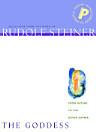
Reverse Ritual: Spiritual Knowledge is True Communion
Jan 2001 · SteinerBooks
Ebook
288
Pages
Tools
info
About this ebook
Religious ritual is often seen as a way of bringing divine influences down into the material world. In this profound and stimulating work, Rudolf Steiner and Friedrich Benesch introduce the idea of "reverse ritual"--a way that each of us can raise our souls to the spiritual realm.
In this process, the everyday world becomes a portal through which we can enter the dimension of the sacred. Here, each of us can be a "priest," and each of our actions can be a cosmic, ritual act.
This stimulating collection of writings on spiritual communion of humanity includes two further lectures by Steiner that show how this process can engage our social lives. Also included are two additional essays as appendices: "Sacramental and Spiritual Communion" by Dietrich Asten and "Human Encounters and Karma" by Athys Floride.
The introduction by Christopher Schaefer brings these ideas into focus for modern seekers.
Contents:
In this process, the everyday world becomes a portal through which we can enter the dimension of the sacred. Here, each of us can be a "priest," and each of our actions can be a cosmic, ritual act.
This stimulating collection of writings on spiritual communion of humanity includes two further lectures by Steiner that show how this process can engage our social lives. Also included are two additional essays as appendices: "Sacramental and Spiritual Communion" by Dietrich Asten and "Human Encounters and Karma" by Athys Floride.
The introduction by Christopher Schaefer brings these ideas into focus for modern seekers.
Contents:
- Part One: "The Spiritual Communion of Humanity" (5 lectures from GA 219)
- Part Two: "Preparing for the Sixth Epoch"
- Part Three: Commentaries by Friedrich Benesch
- Appendices: Selections from Dietrich Asten: "Spiritual and Sacramental Communion" & Athys Floride: "Human Encounters and Karma."
Religious ritual is often seen as a way of bringing divine influences down into the material world. In this profound and stimulating work, Rudolf Steiner and Friedrich Benesch introduce the idea of "reverse ritual"--a way that each of us can raise our souls to the spiritual realm.
In this proce...
Discover more
About the author
Rudolf Steiner (1861-1925) was born in the small village of Kraljevec, Austro-Hungarian Empire (now in Croatia), where he grew up. As a young man, he lived in Weimar and Berlin, where he became a well-published scientific, literary, and philosophical scholar, known especially for his work with Goethe's scientific writings. At the beginning of the twentieth century, he began to develop his early philosophical principles into an approach to systematic research into psychological and spiritual phenomena. Formally beginning his spiritual teaching career under the auspices of the Theosophical Society, Steiner came to use the term Anthroposophy (and spiritual science) for his philosophy, spiritual research, and findings. The influence of Steiner's multifaceted genius has led to innovative and holistic approaches in medicine, various therapies, philosophy, religious renewal, Waldorf education, education for special needs, threefold economics, biodynamic agriculture, Goethean science, architecture, and the arts of drama, speech, and eurythmy. In 1924, Rudolf Steiner founded the General Anthroposophical Society, which today has branches throughout the world. He died in Dornach, Switzerland.
Friedrich Benesch (1907-1991) was born in a German-speaking part of Romania and earned doctorates in biology, theology, and anthropology. He was later ordained in The Christian Community and became the leader of its seminary in Stuttgart in 1957. He traveled, lectured, and published extensively.
Rudolf Steiner (1861-1925) was born in the small village of Kraljevec, Austro-Hungarian Empire (now in Croatia), where he grew up. As a young man, he lived in Weimar and Berlin, where he became a well-published scientific, literary, and philosophical scholar, known especially for his work with Go...
Rate this ebook
Tell us what you think.
Reading information
Smartphones and tablets
Install the Google Play Books app for Android and iPad/iPhone. It syncs automatically with your account and allows you to read online or offline wherever you are.
Laptops and computers
You can listen to audiobooks purchased on Google Play using your computer's web browser.
eReaders and other devices
To read on e-ink devices like Kobo eReaders, you'll need to download a file and transfer it to your device. Follow the detailed Help Center instructions to transfer the files to supported eReaders.