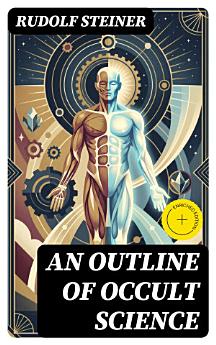
An Outline of Occult Science (Annotated): Enriched Edition. Spiritual Science, Esoteric Cosmology, and the Evolution of Human Consciousness
Sep 2022 · DigiCat
Ebook
290
Pages
family_home
Eligible
info
About this ebook
First published in 1910, Rudolf Steiner's *An Outline of Occult Science* presents an ambitious account of humanity's spiritual origins, cosmic evolution, and future development. Drawing on the methods and vocabulary of Theosophy while reshaping them within Steiner's emerging Anthroposophy, the book describes supersensible worlds, planetary and human evolutionary stages, reincarnation, karma, and the constitution of the human being. Its literary style combines systematic exposition with visionary cosmology: Steiner writes as a spiritual investigator, guiding readers through symbolic narratives and insisting that disciplined inner exercises can cultivate higher forms of perception. The work thus belongs both to the esoteric traditions of modern Europe and to the intellectual history of early twentieth-century alternatives to materialist science. Steiner (1861–1925), an Austrian philosopher, educator, and cultural reformer, developed Anthroposophy after his departure from the Theosophical Society. His engagement with Goethe's scientific and aesthetic thought, German idealism, Christianity, and contemporary debates about spiritual knowledge shaped his effort to reconcile rigorous cognition with religious experience. This book distills that lifelong project into a comprehensive spiritual worldview. Readers interested in esotericism, comparative religion, intellectual history, or the spiritual dimensions of modernity will find the book especially rewarding. It should be approached critically—not as conventional empirical science, but as a foundational document of Anthroposophical thought and a sustained invitation to examine how knowledge, imagination, and moral self-cultivation might converge. This enriched edition has been carefully crafted to add value to your reading experience. - A succinct Introduction situates the work's timeless appeal and themes. - The Synopsis outlines the central plot, highlighting key developments without spoiling critical twists. - A detailed Historical Context immerses you in the era's events and influences that shaped the writing. - A thorough Analysis dissects symbols, motifs, and character arcs to unearth underlying meanings. - Reflection questions prompt you to engage personally with the work's messages, connecting them to modern life. - Hand‐picked Memorable Quotes shine a spotlight on moments of literary brilliance. - Interactive footnotes clarify unusual references, historical allusions, and archaic phrases for an effortless, more informed read.
First published in 1910, Rudolf Steiner's *An Outline of Occult Science* presents an ambitious account of humanity's spiritual origins, cosmic evolution, and future development. Drawing on the methods and vocabulary of Theosophy while reshaping them within Steiner's emerging Anthroposophy, the bo...
Discover more
About the author
Rudolf Steiner (1861–1925) was an influential philosopher, social reformer, and esotericist of the late 19th and early 20th centuries. Born in present-day Croatia, Steiner was a leading figure in the anthroposophical movement—a spiritual philosophy that sought to bridge the gap between science and spirituality. He was a prolific writer and lecturer, with an extensive body of work that includes philosophy, education, agriculture, medicine, and the arts. Steiner completed his doctoral dissertation on Fichte's concept of the ego at the University of Rostock and soon became renowned for his intellectual rigor and insight. One of his most notable works, 'An Outline of Occult Science', presents a comprehensive look at the framework and phenomena of the spiritual world from an anthroposophical perspective. In it, Steiner discusses the evolution of the universe and humanity, the nature of the soul, and the paths of spiritual knowledge. His literary style is methodical yet profound, often challenging conventional scientific thought with a nuanced blend of mysticism and logic. Throughout his life, Steiner worked to implement his ideas practically, establishing the Waldorf educational philosophy, biodynamic farming, and anthroposophic medicine, all of which have lasting legacies today.
Rudolf Steiner (1861–1925) was an influential philosopher, social reformer, and esotericist of the late 19th and early 20th centuries. Born in present-day Croatia, Steiner was a leading figure in the anthroposophical movement—a spiritual philosophy that sought to bridge the gap between science an...
Rate this ebook
Tell us what you think.
Reading information
Smartphones and tablets
Install the Google Play Books app for Android and iPad/iPhone. It syncs automatically with your account and allows you to read online or offline wherever you are.
Laptops and computers
You can listen to audiobooks purchased on Google Play using your computer's web browser.
eReaders and other devices
To read on e-ink devices like Kobo eReaders, you'll need to download a file and transfer it to your device. Follow the detailed Help Center instructions to transfer the files to supported eReaders.